Richard Stafford
SA Architect Registration No. 2297
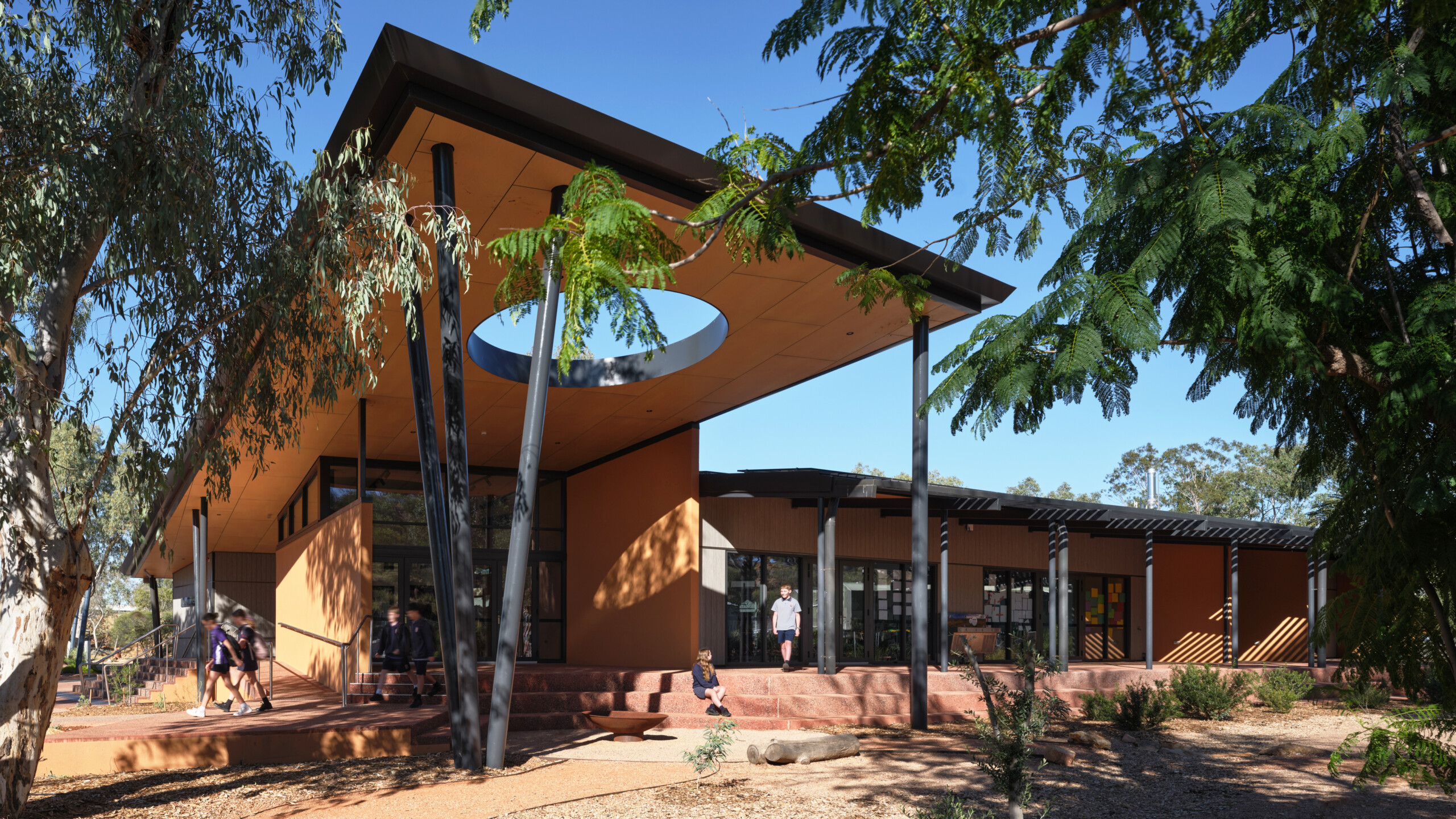
St Philip’s Discovery Centre is a purpose-built learning environment in the heart of Alice Springs, connecting students with nature, culture, and their community. Reflecting the school’s vision: ‘Discovering our place in the world through an adventurous education.’ The design brings life to the values of striving, seeking, and caring with heart.
More than a building, the Centre is a hub for collaboration, creativity, and exploration. Its strong relationship with the landscape, flexible learning spaces, and cultural integration supports wellbeing, sparks curiosity, and strengthens learning and connection.
Inspiring curiosity to unlock discovery
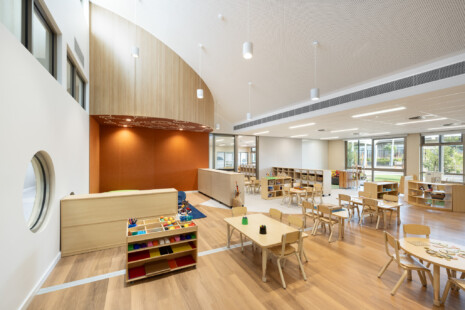
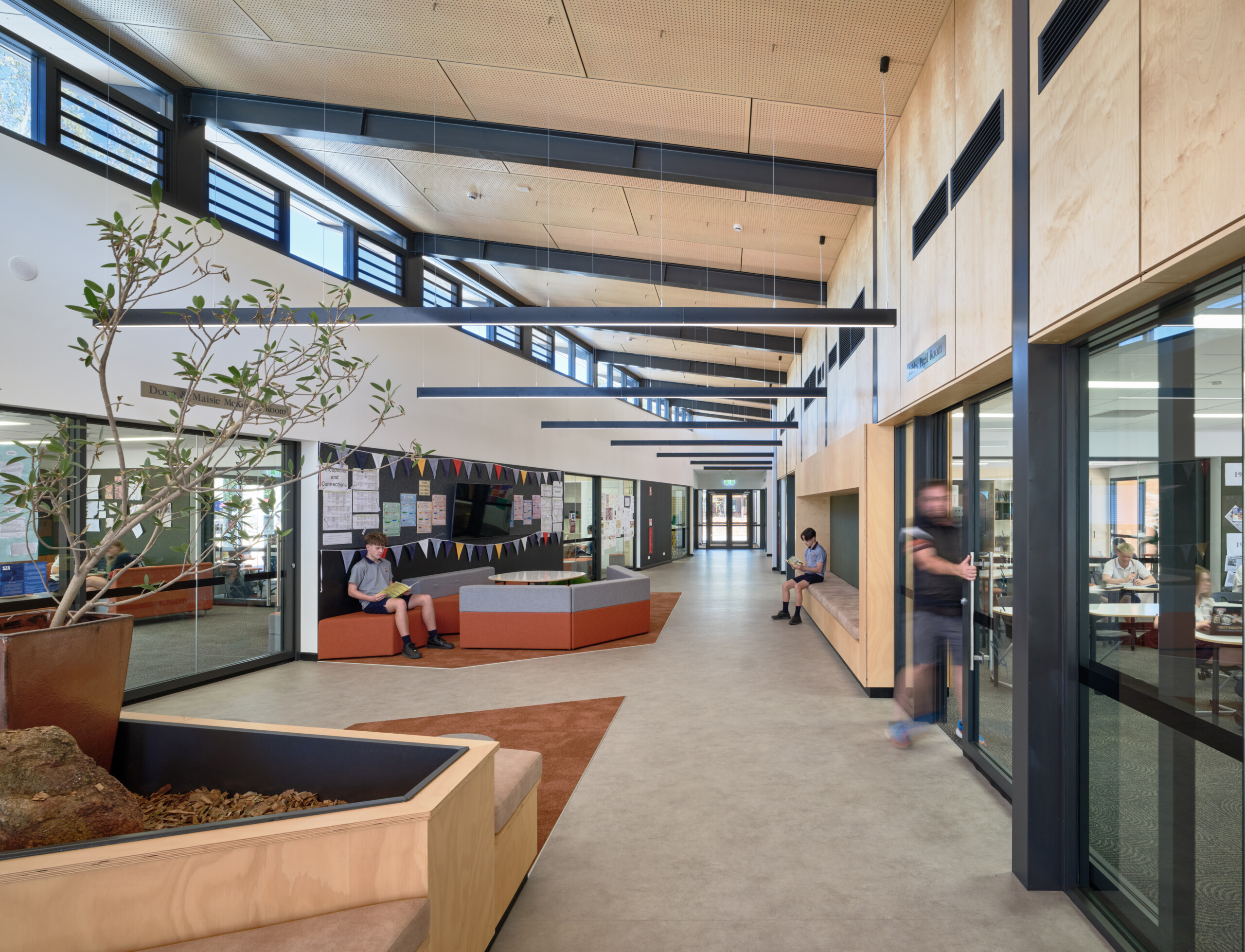
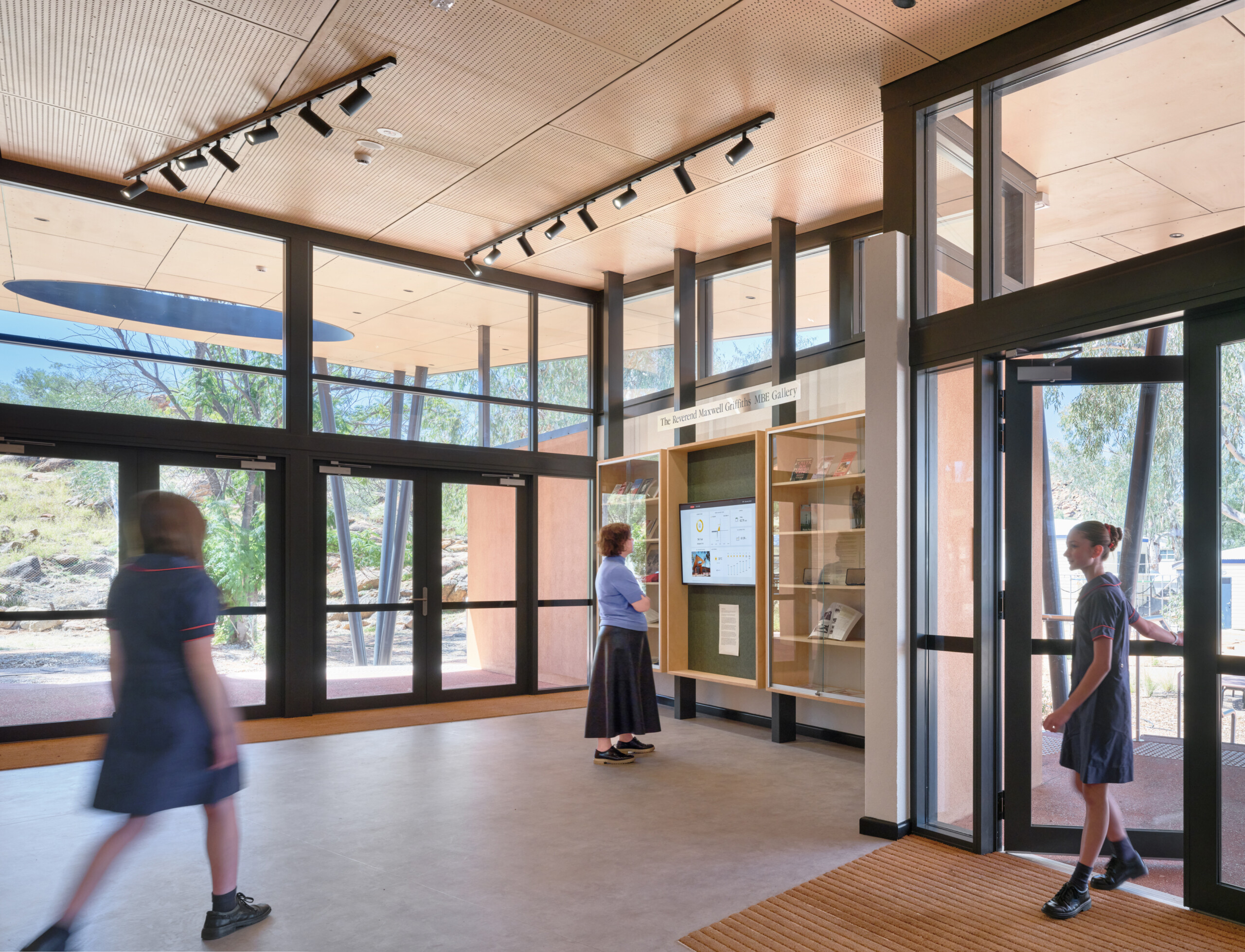
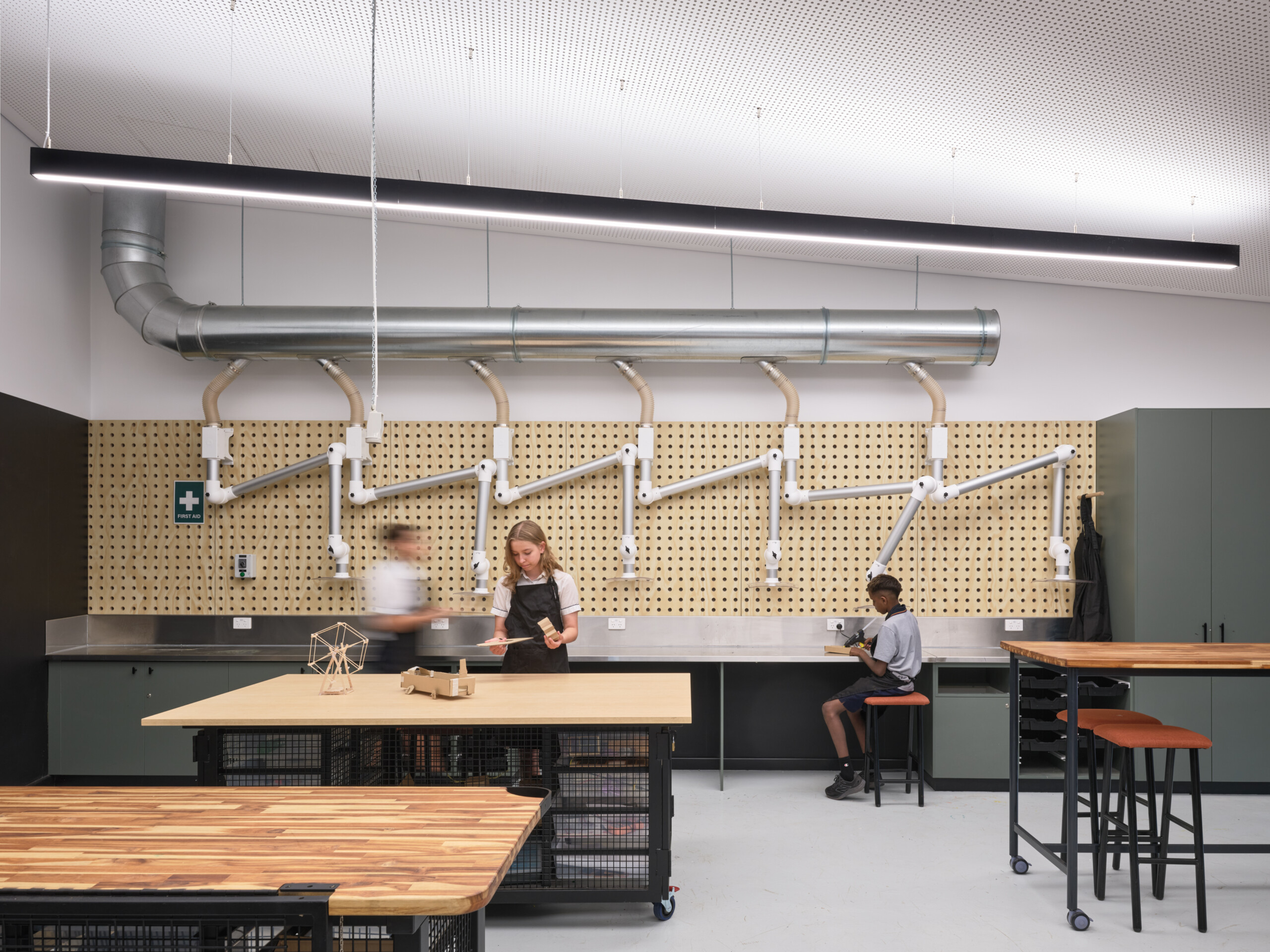
Set within Australia’s central landscape, the building engages with its surroundings and honours community ties and cultural heritage. As the latest addition to the school’s master plan, it has reinvigorated the campus, bringing a renewed sense of pride, perspective, and optimism for the future. The grand opening celebrated this milestone with excitement and community pride. The Centre accommodates a wide range of teaching methodologies, drawing on the strengths each educator brings. Learning spaces are open, flexible, and adaptable, with mobile furniture, AV displays, and specialised zones such as tech labs, laser cutters, and ‘dirty learning’ areas. Every element encourages hands-on discovery, collaboration, and well-being. Openness and transparency throughout the building fosters interaction and connection, supporting the school’s work ethic and culture while motivating students to explore and engage with their learning environment.
Where nature and culture enriches learning
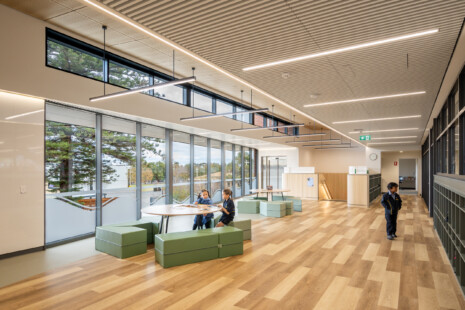
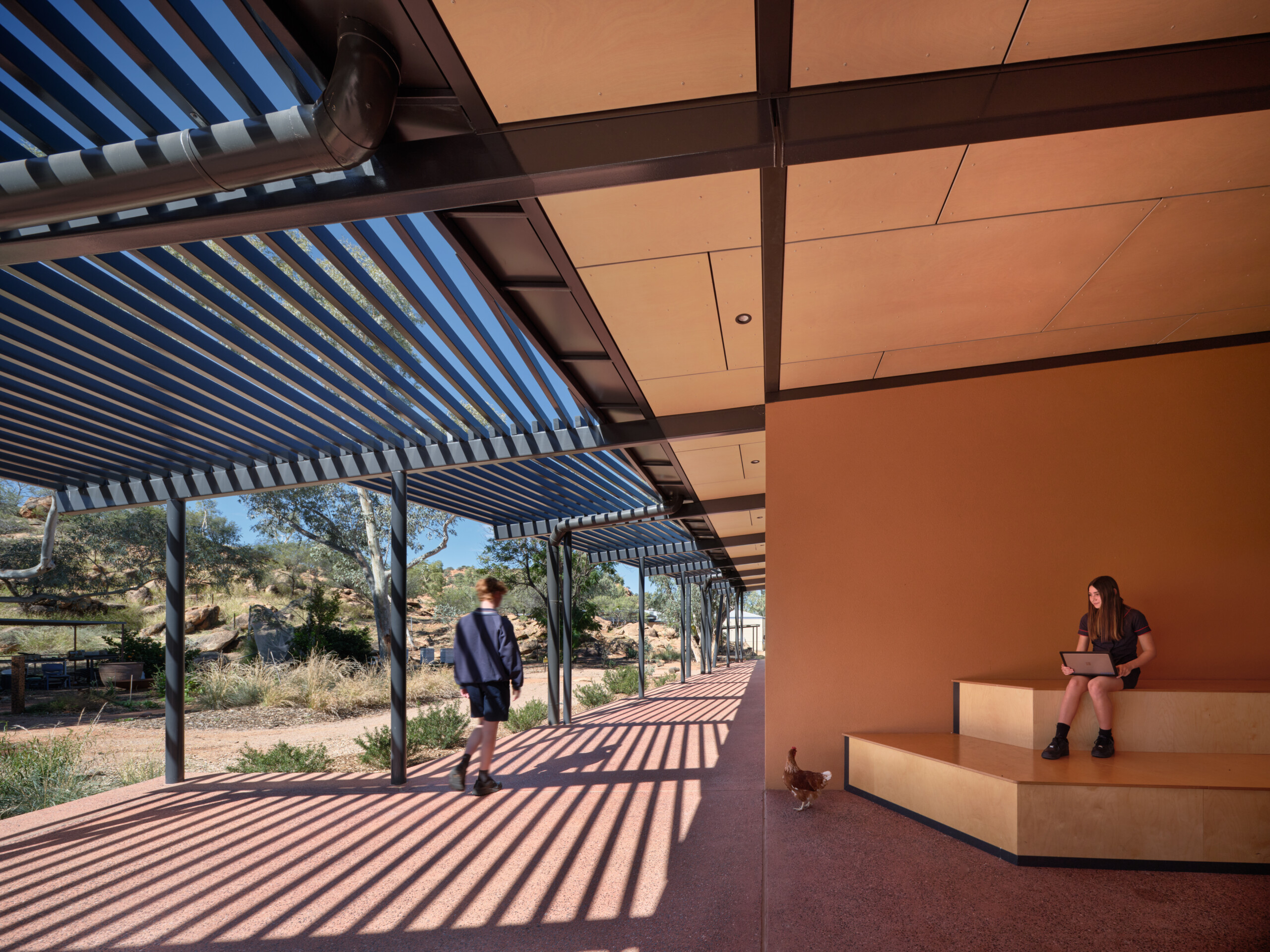
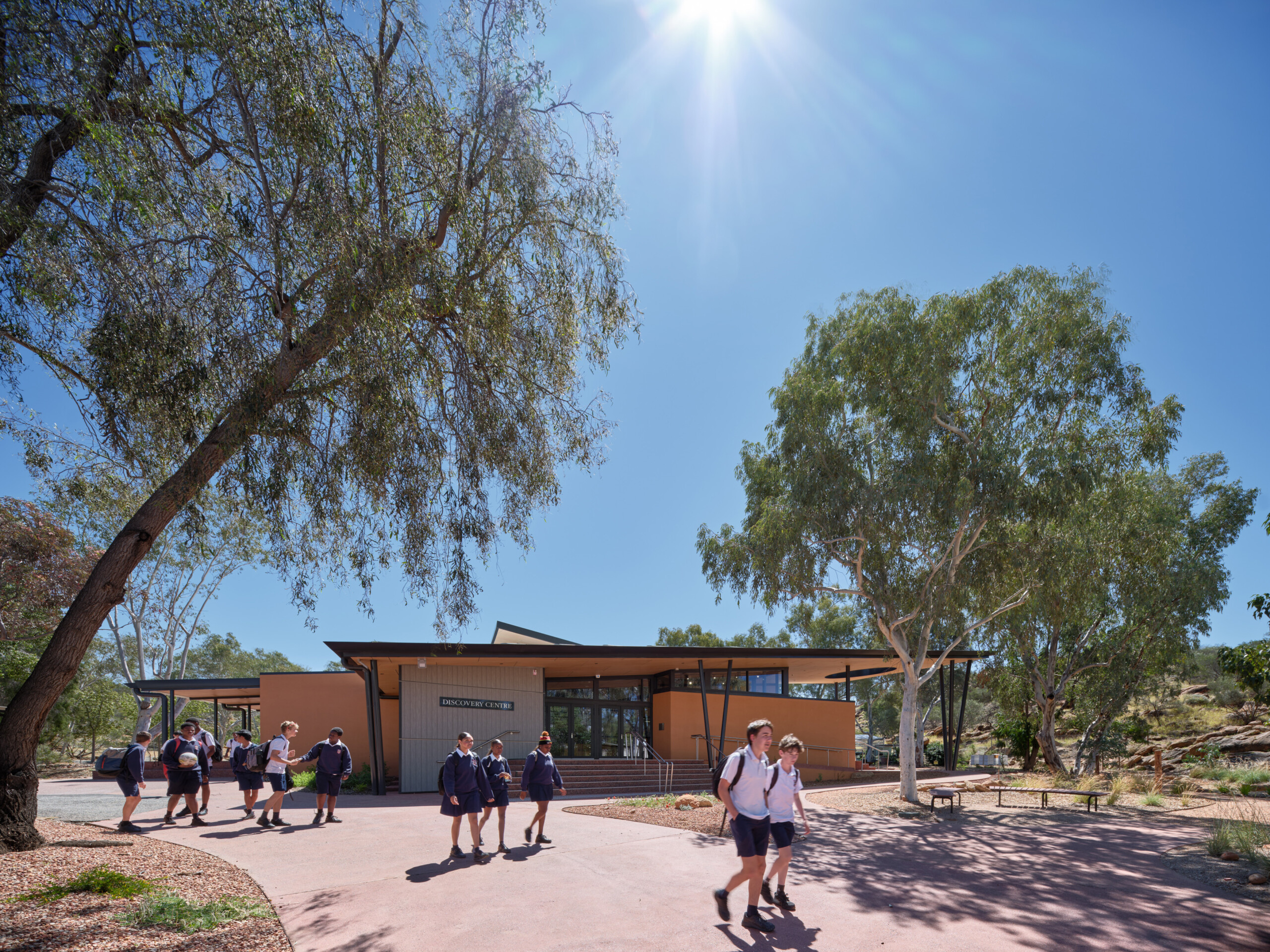
Designed to blend seamlessly with the surrounding landscape yet confident in its presence, the centre complements its environment while enhancing the campus visually. Learning spaces offer expansive views, with the north overlooking the rock escarpment and the south framing the heritage bush chapel and nearby creek. Outdoor classrooms, podium seating, and flexible perimeter spaces complement indoor areas, encouraging retreat, collaboration, and connection with nature. Materials and finishes reflect the tones and textures of the local landscape, creating a thoughtful balance between environmental sensitivity and functional design.
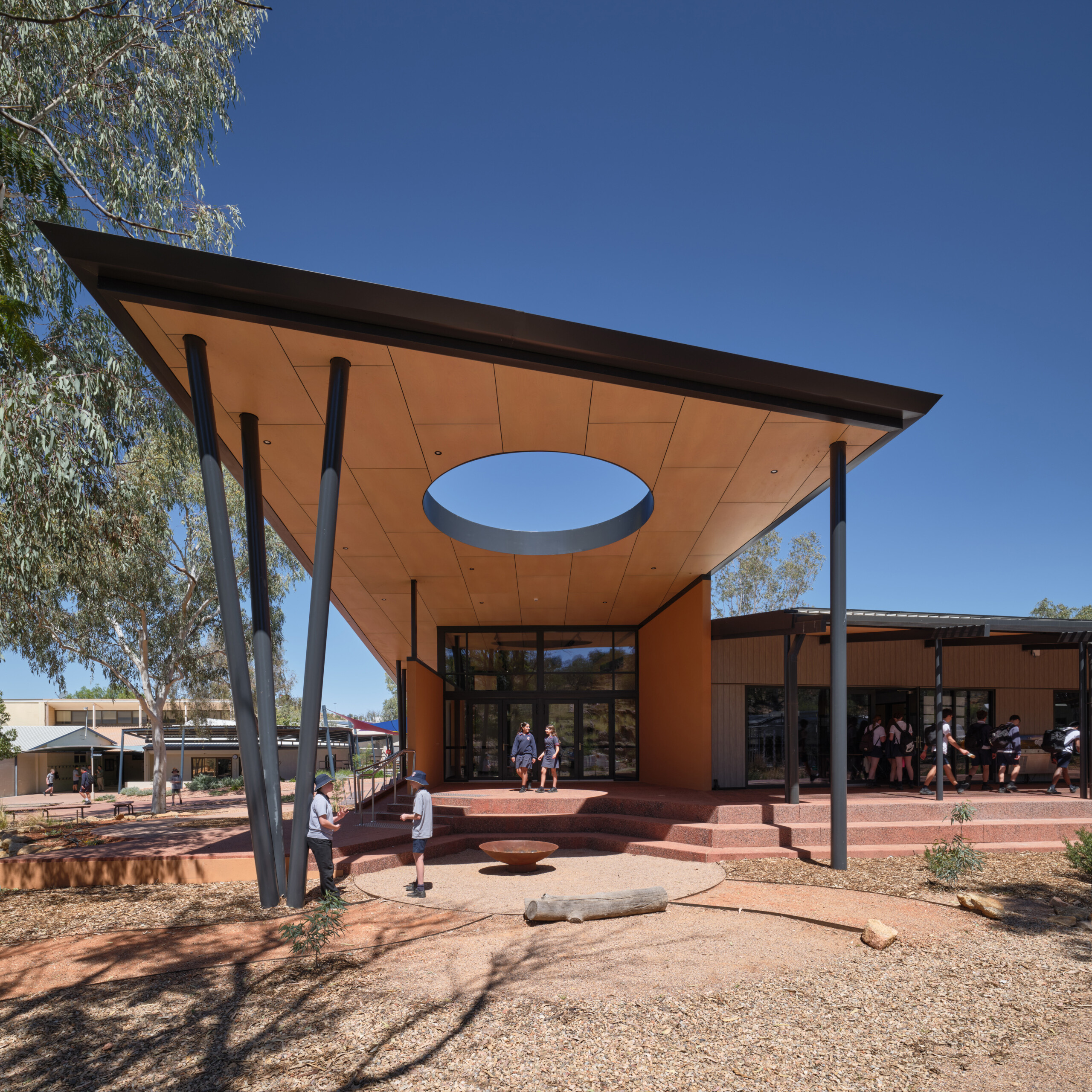
Cultural identity is central to the projects intention. The building integrates with the chapel, supporting community events, while Indigenous representation informs the naming of spaces, material choices, and gestures such as the yarning circle. Community contributions—from landscaping to participation in the grand opening—enrich the campus with meaning and pride. Featuring a gallery-style entrance with honour boards to highlight the school’s history and values, immediately connecting students with the school’s identity and inspiring them to embody its principles.
Learning sustainably in connection with place
Sustainability is embedded throughout, supporting cross-disciplinary learning and practical engagement with agriculture and livestock studies. Passive solar design, shading, ventilation, and durable materials respond to the Central Australian climate, while photovoltaic panels, solar power, stormwater harvesting, and battery storage reduce environmental impact. Natural light floods learning spaces through extensive glazing, creating bright, uplifting environments that enhance wellbeing.
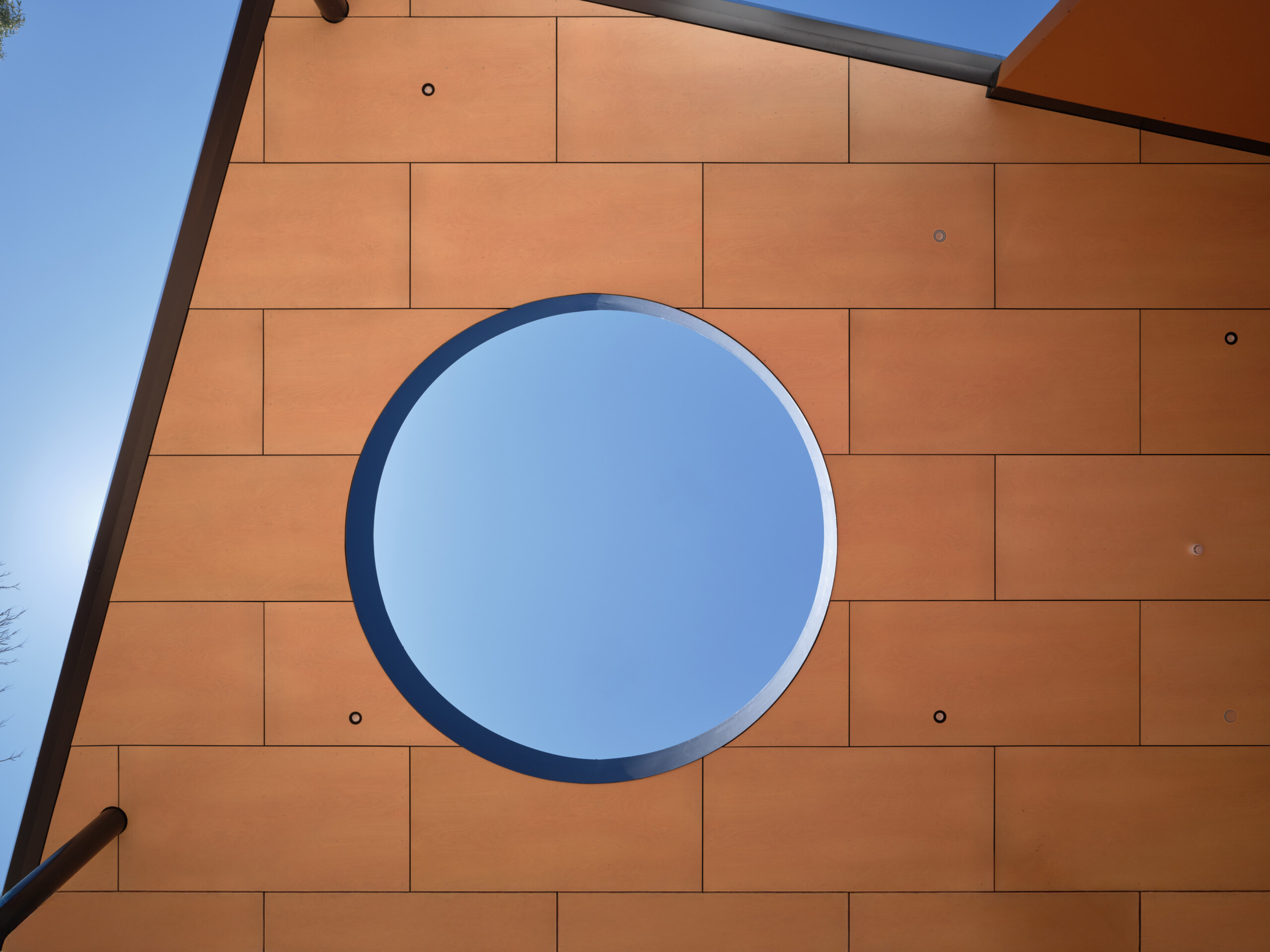
A central east–west spine transforms a previously overlooked corner of the campus into a vibrant focal point, linking learning commons, GLAs, and SLAs with transparency, sliding doors, and flexible layouts. Façade and roof design balances aesthetics with function, manipulating light and shade to provide comfort. Inspired by the yarning circle, the circular roof opening serves as a central gathering space that fosters conversation, reflection, and play, while casting dynamic shadows that subtly mark the passage of the day—an engaging feature that sparks curiosity and delights students. The entrance and interior spaces are open, inviting, and adaptable, embodying the school’s vision: ‘Discovering our place in the world through an adventurous education.’ Together, these features create a learning environment that celebrates exploration, community, culture, and resilience.
SA Architect Registration No. 2297

SA Architect Registration No. 3511


SA Architect Registration No. 3894