Singleton Bypass
Singleton Bypass reshapes movement through the Upper Hunter
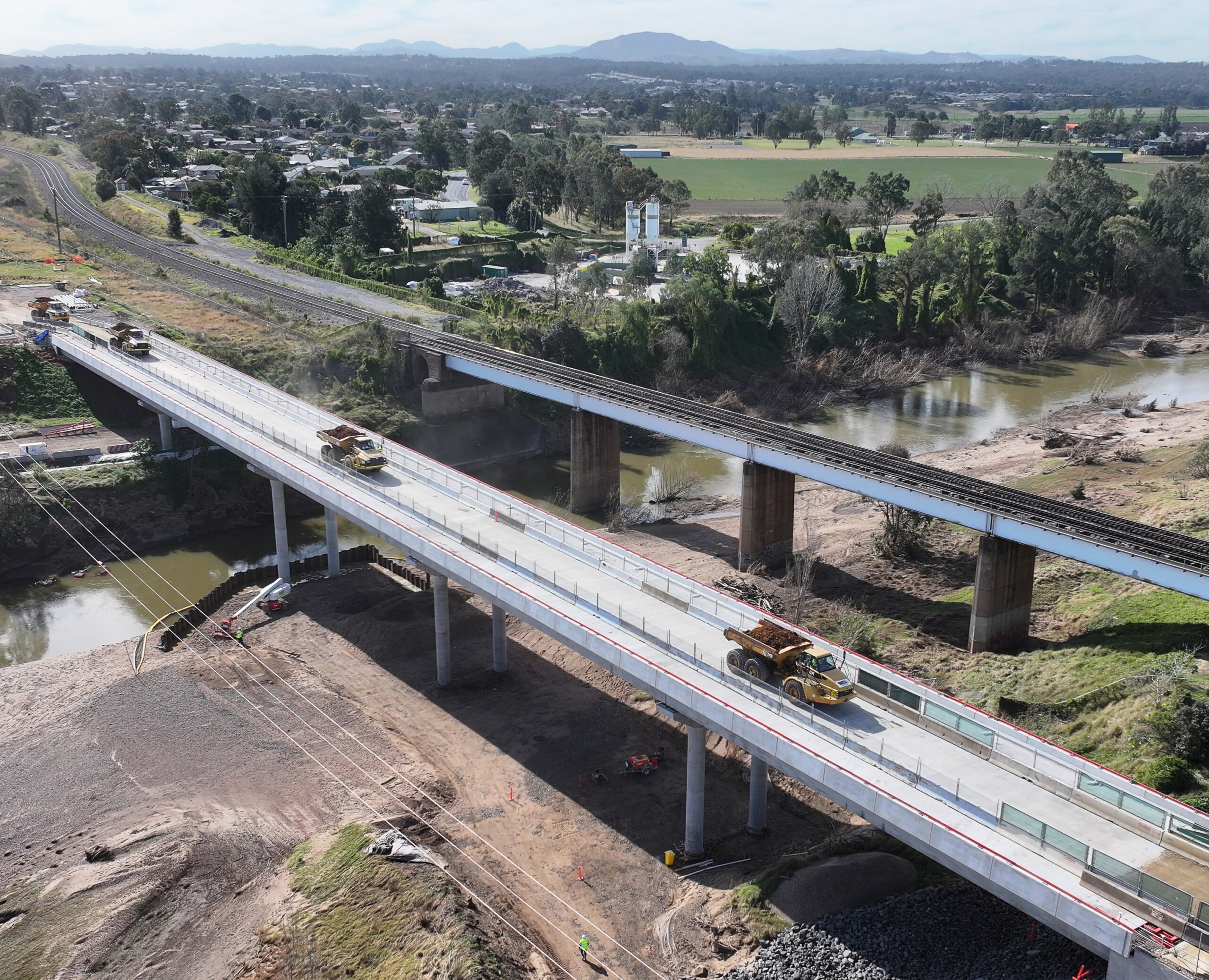
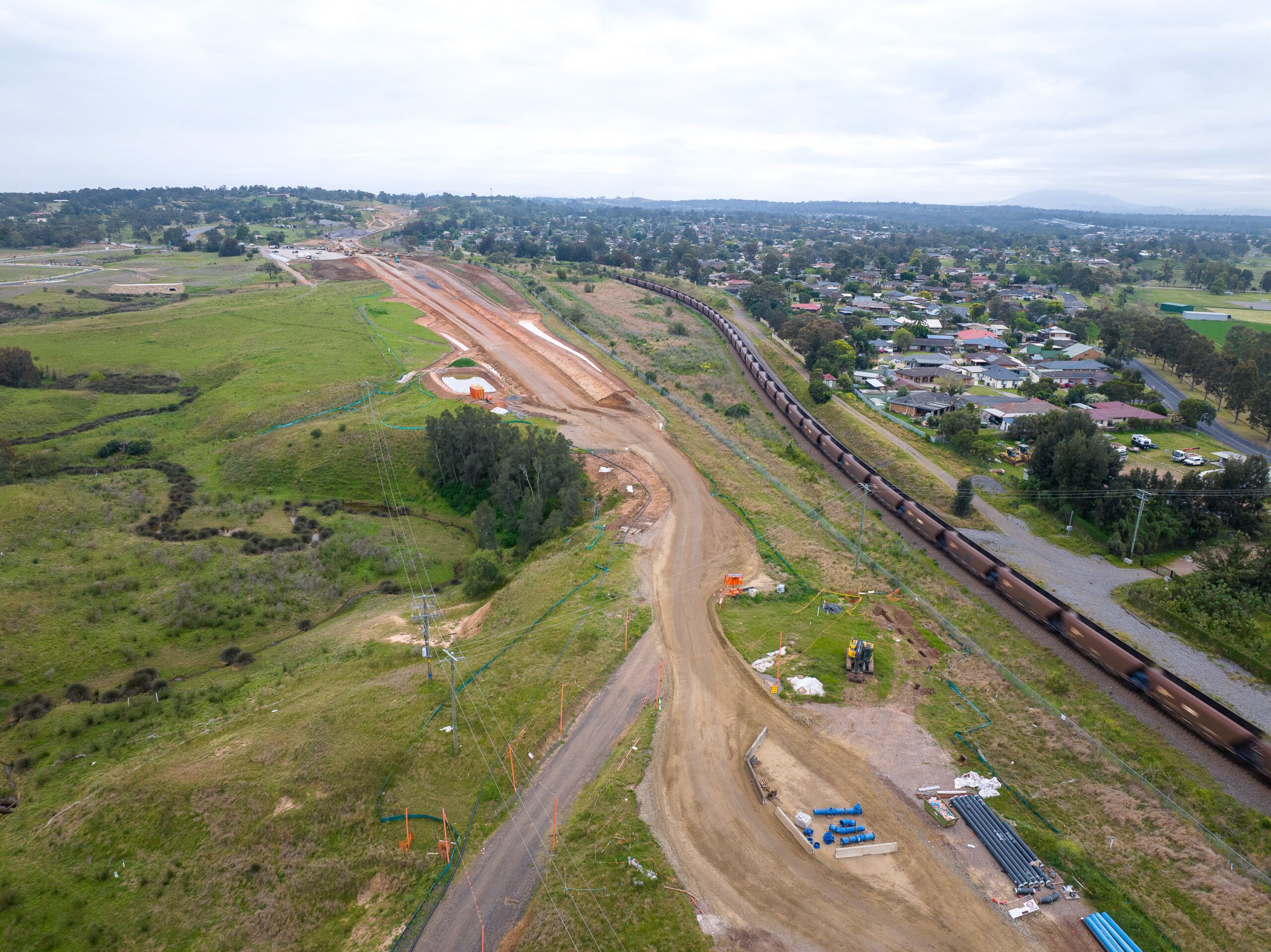
At eight kilometres long, Singleton Bypass is one of the largest infrastructure investments in the township’s history—a major road upgrade set to greatly improve the Upper Hunter region’s road safety and commuter experience. It achieves this through a solution which allows traffic to bypass five sets of lights in the Singleton CBD, diverting heavy freight and industry transport away from the regional CBD.
Located on the New England Highway, the current road is a major freight and commuter route, passing through Singleton on the main road through the town. The route is pivotal to the freight of local goods across Australia and abroad, connecting to the major centres of Newcastle and Sydney. As a result, and in conjunction with mining activities in the region, the road accommodates a high volume of oversize overmass vehicles and trucks daily.
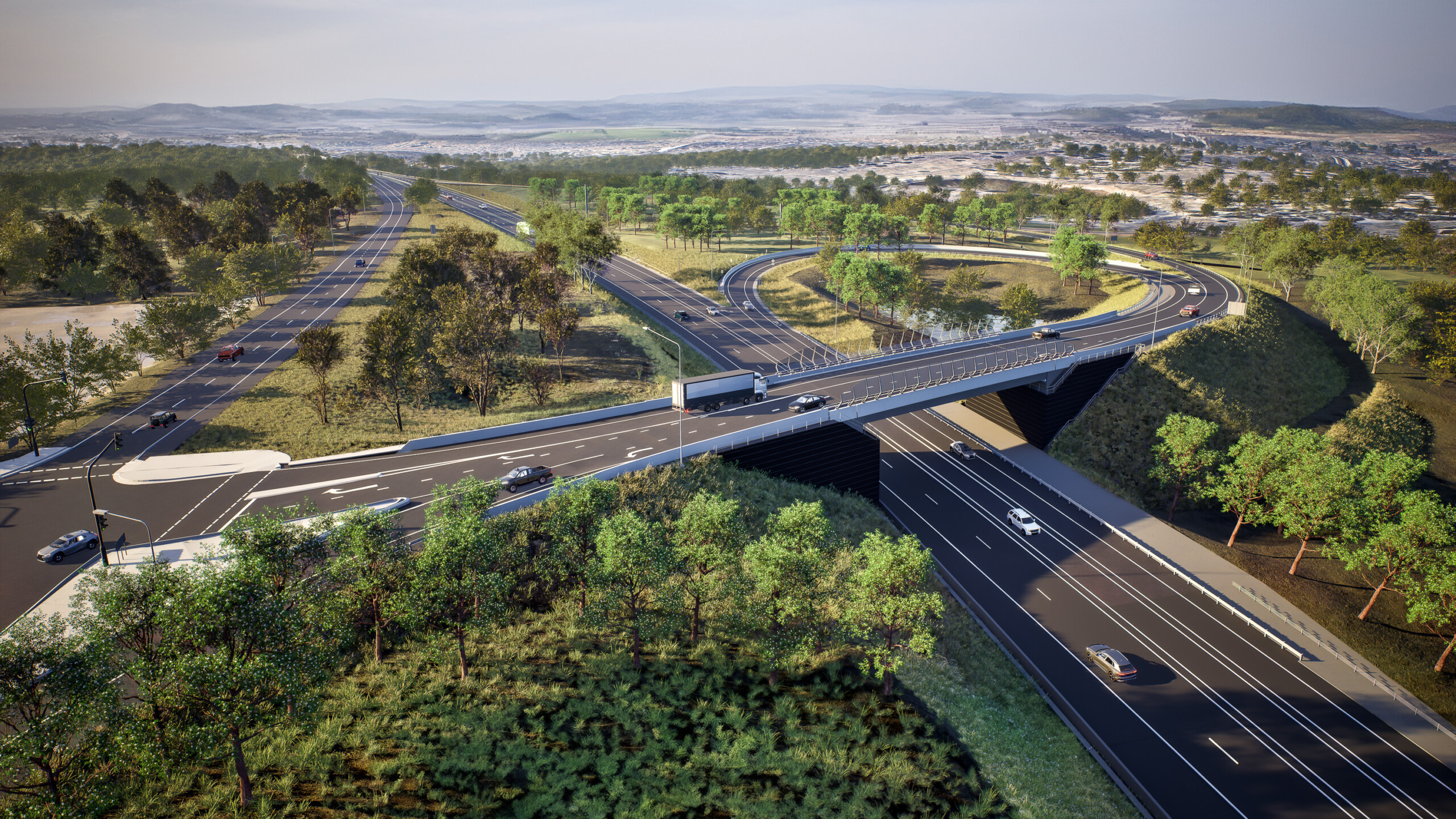
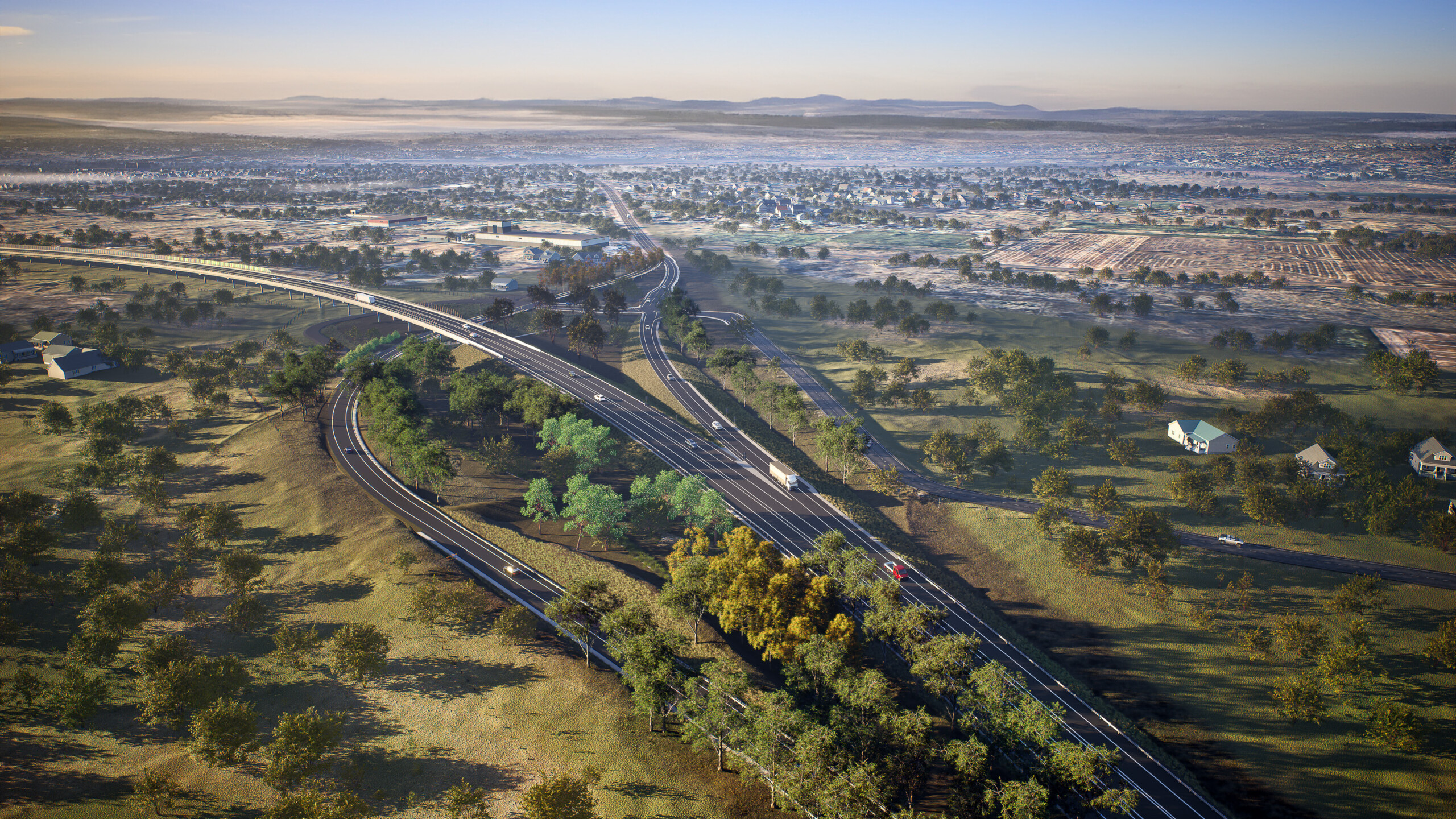
Guided by agreed urban design principles, the project enhances road safety and traffic flows through a series of interventions. Strategic landscaping and bridge structures form landmarks along the road and at the four major gateways—Southern Connection, Putty Road, Gowrie Gates and the Northern Connection—ensuring clarity for travellers and framing key views.
DesignInc provided integrated urban and landscape design for the project, collaborating with ACCIONA (Contractor), Aurecon (Engineering Design), and Nguluway DesignInc (Designing from Country, First Nations Community Engagement) for Transport for NSW.
Collaborative Design Engineering, Connected with Country
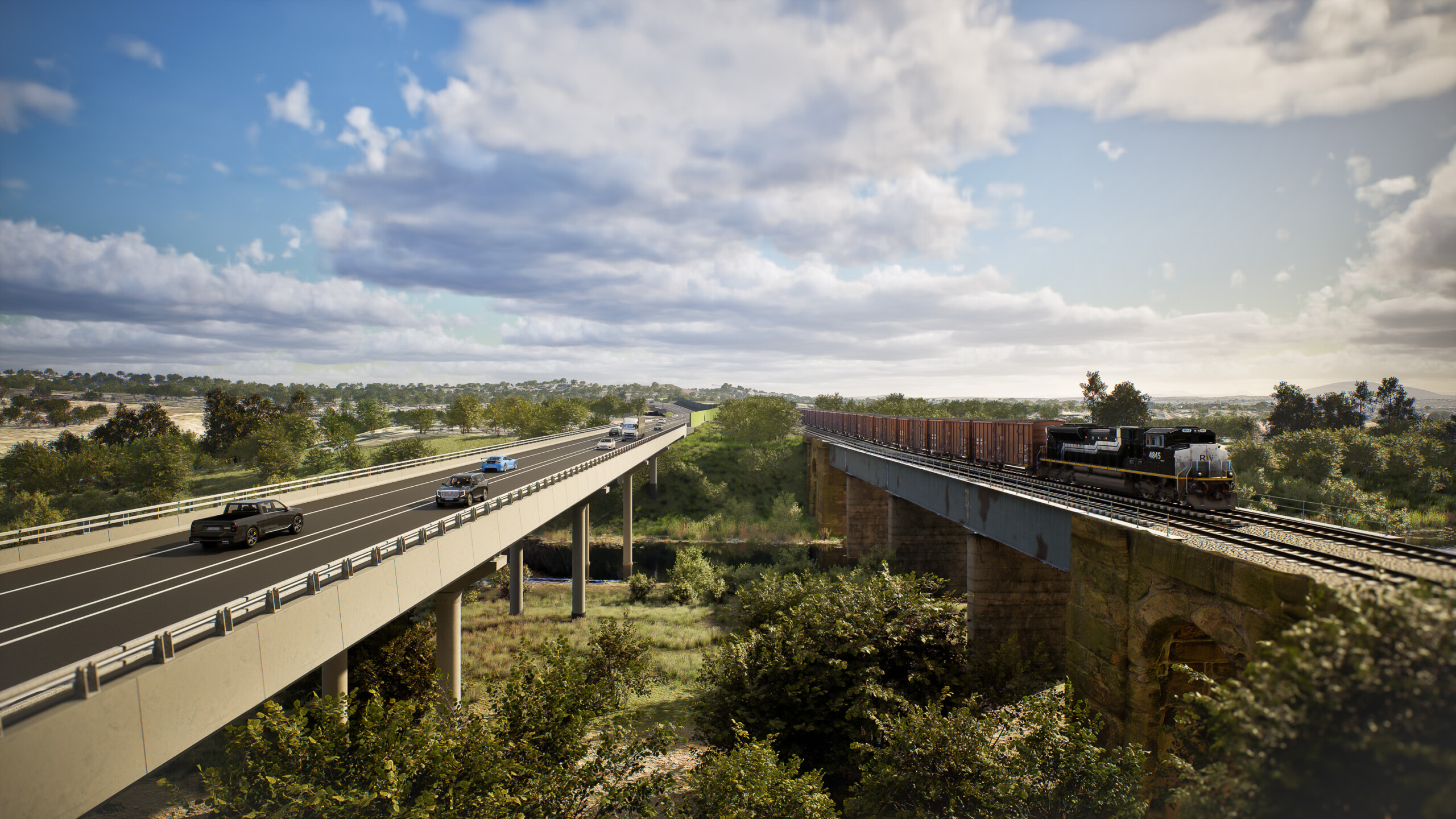
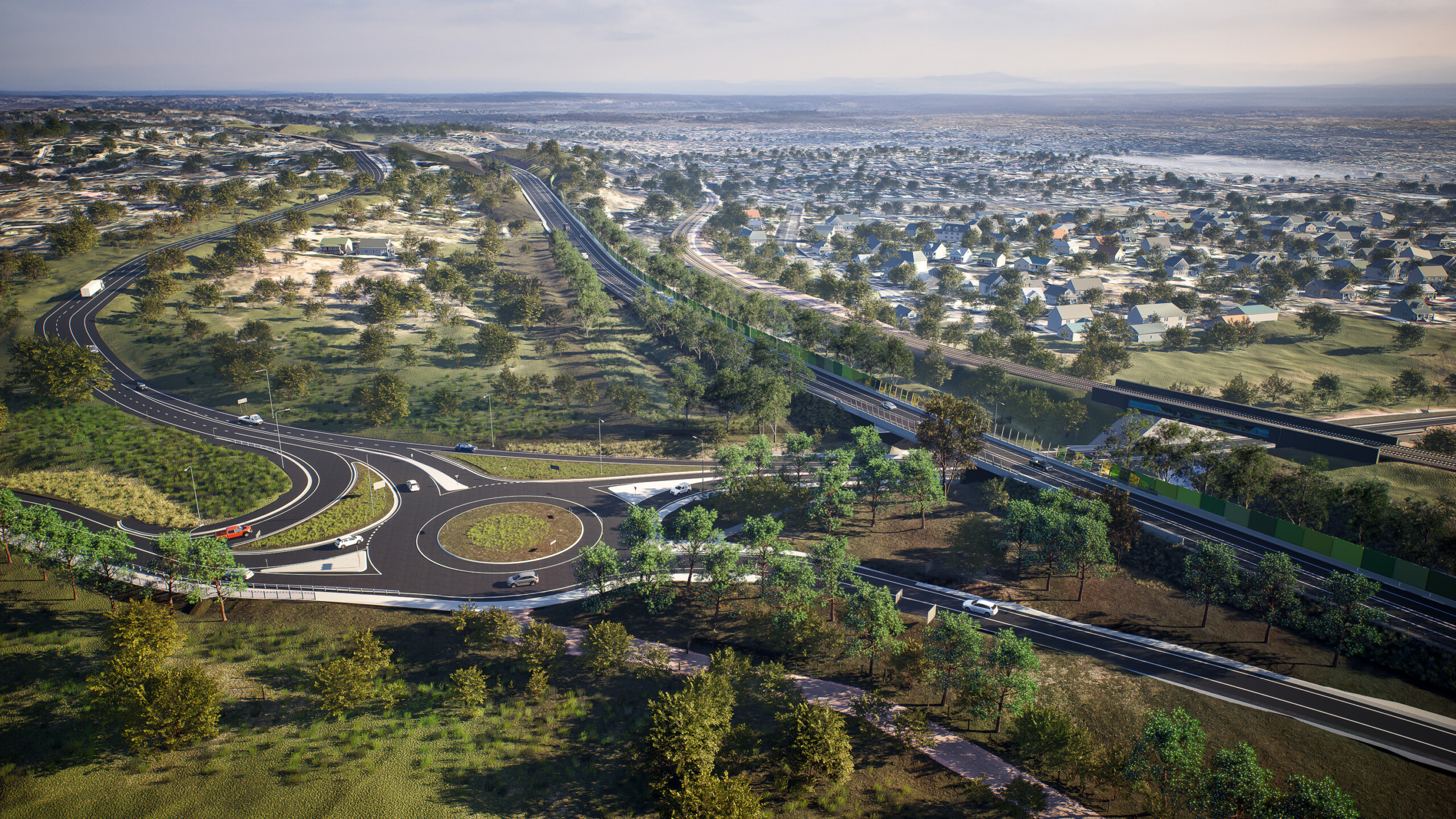
Close consultation with the engineering team at Aurecon ensured a seamless, six-bridge solution traversing the Hunter River, its flood plains and key ecological zones.
Bridges amount to almost 2.6km, including:
- 600m over the Singleton bypass at the Southern Connection
- 1.64km over Main North Railway Line, Doughboy Hollow and Hunter River floodplain, Army Camp Road and Putty Road
- 99m over Rose Point Floodway
- 190m over Hunter River (Mayan)
- 33m over New England Highway at Gowrie Gates
- 37m over the bypass at the Northern Connection
Integrating First Nation’s Connection to Place
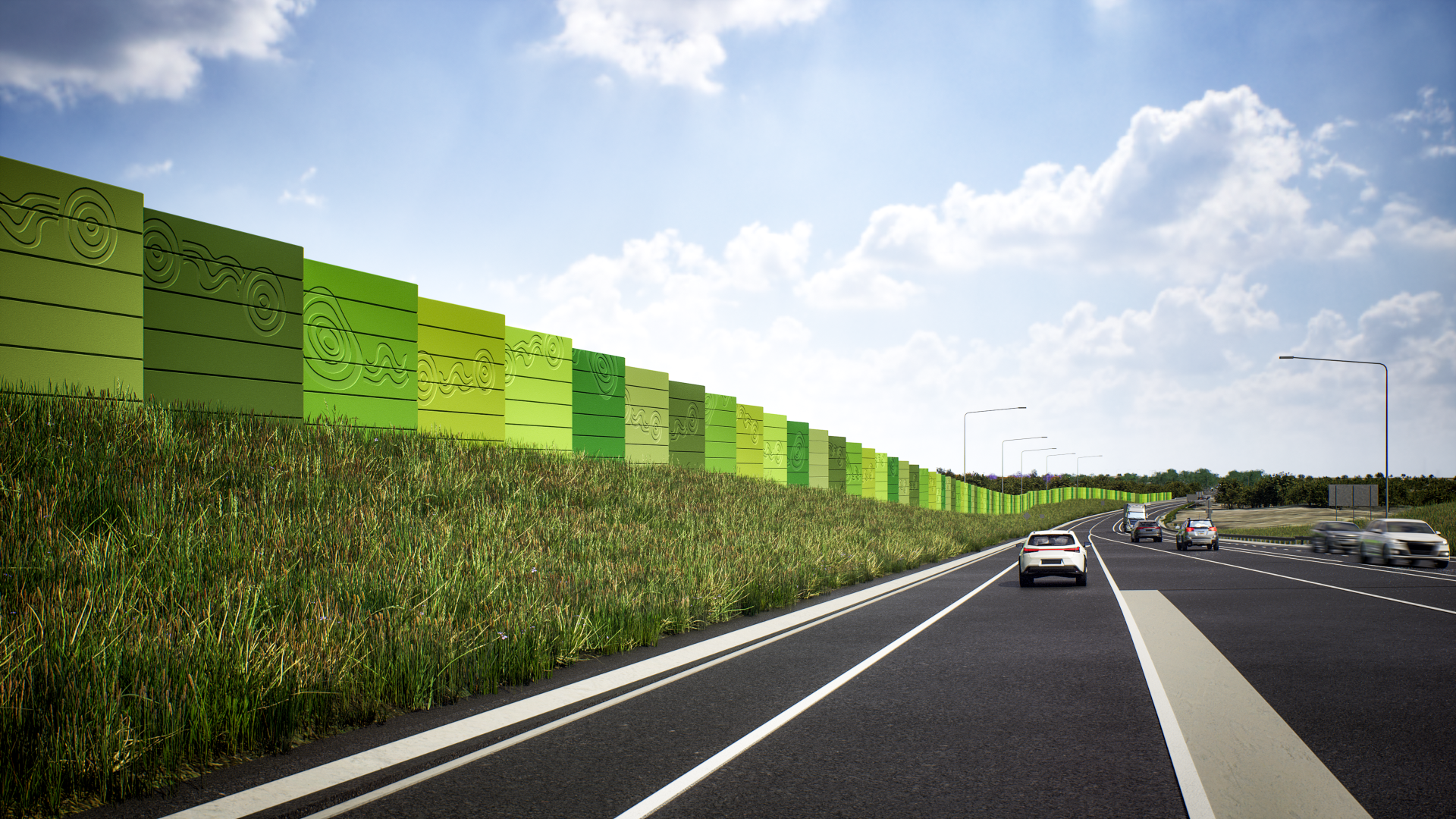
Facilitated by Nguluway DesignInc, community engagement with the local First Nations community resulted three iconic Indigenous artworks to enhance the travel experience through the Singleton Bypass.
The artworks facilitated by artist Saretta Fielding in consultation with the local knowledge holders represent the land of the Wonnarua/Wanaruah People in the Singleton area, paying respect to important landscape landmarks including the Mayan (Hunter River), whose wetlands and waters have provided vital resources for countless generations. Knowledge holders spoke of the Singleton area as a central location from which pathways connected people in all directions, reflecting their cultural association with the area and its resulting centrality in their world view.
Landscape as a Navigational Tool
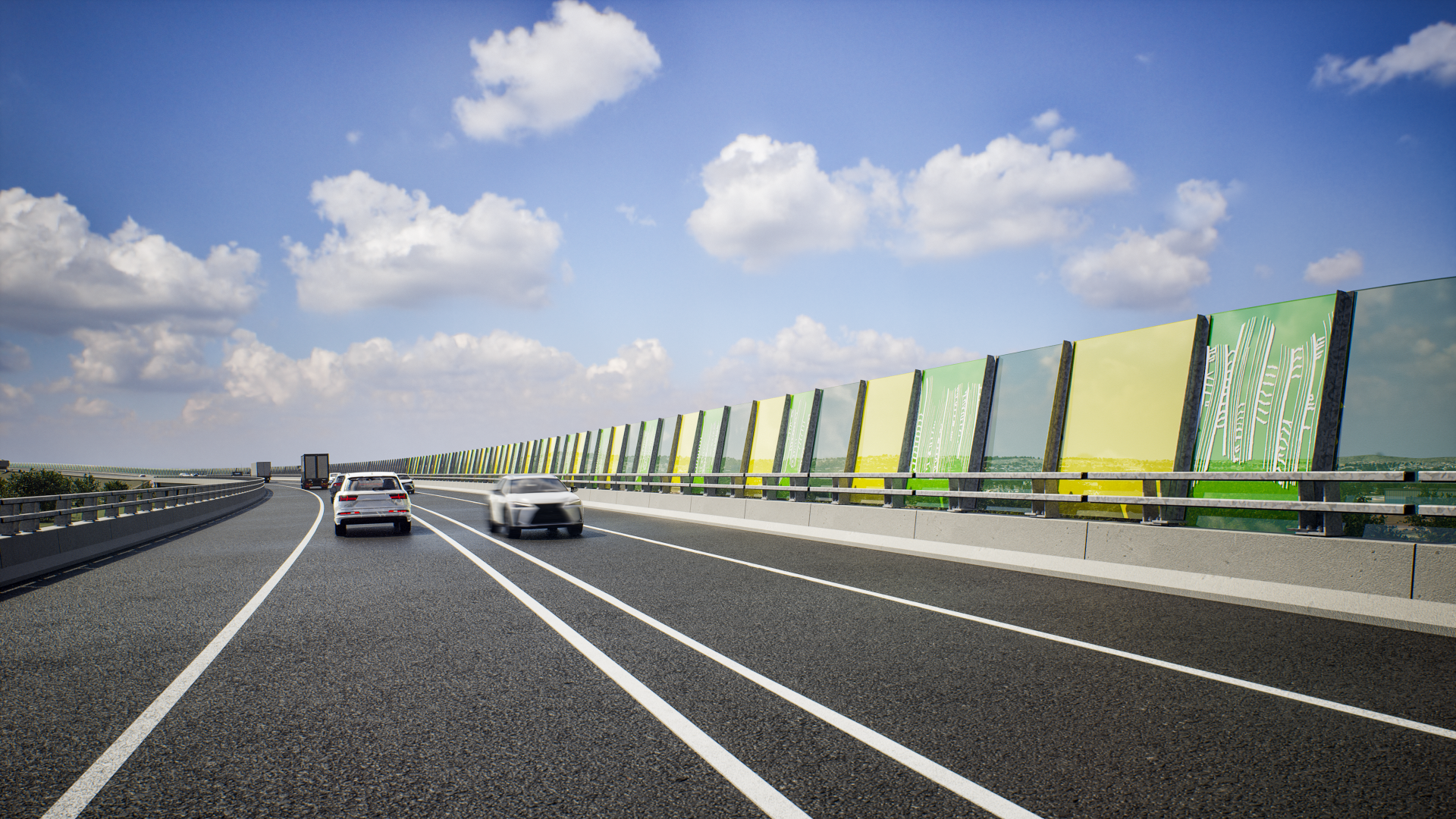
Landscape not only plays a pivotal role in creating intuitive navigation as gateways connecting into townships and local communities but also is a wayfinding tool which creates a sense of arrival. Landscape design at each of the connections is place-specific, responding to the local topography, soil and vegetation communities, providing a consistent, linear identity for the overall route experience.
Landscaping frames the four key connections (south-north)
- Southern Connection
- Putty Road
- Gowrie Gates, and
- Northern Connection.
Landscape is also central to protecting and enhancing the region’s environmental value, specifically its biodiversity. A revegetation strategy of the Singleton Bypass corridor includes landscape treatments such as hydro-mulching or other seeding methods, and plantings catering to local ecology.
Projects
Project
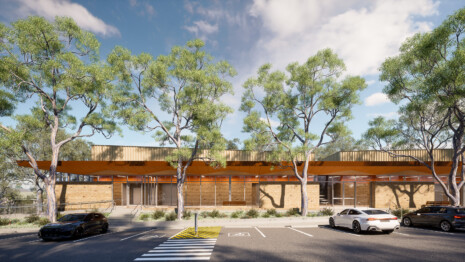
Don Moore Community Centre
A home among the gum trees: Don Moore Community Centre sees the transformation of a 52-year-old centre into a modern gathering place rooted in Country and community life. This project reimagines civic…
Project
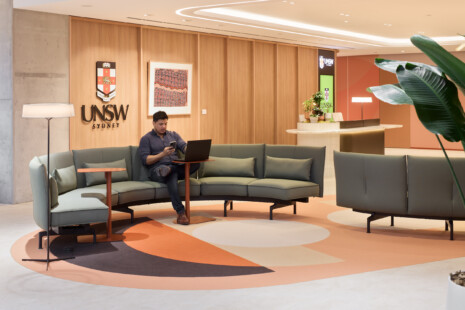
UNSW CBD Campus
A Sustainable Urban Campus for a World-Class University University of New South Wales (UNSW) is one of Australia’s top ranked schools—ranked 19th globally for a second consecutive year in the QS World…
Project
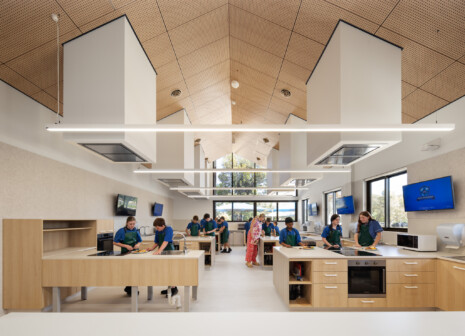
Benalla P–12 College Stage 2B: Administration, Food Technology + Canteen building
Stage 2B builds on the earlier STEAM Centre and Library project, continuing the transformation of Benalla P–12 College into a contemporary, future-focused learning environment. The redevelopment responds to ageing infrastructure and the…
Project
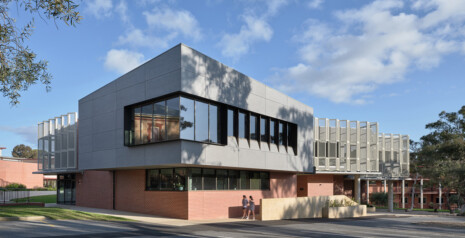
St John’s Grammar School Education Centre – Arts + Technology Enterprise Precinct
Welcoming the latest expansion of St John’s Grammar School secondary campus, an innovative art and technology precinct designed in collaboration with DesignInc. Centrally located, this dynamic hub continues the evolution of the…
Project
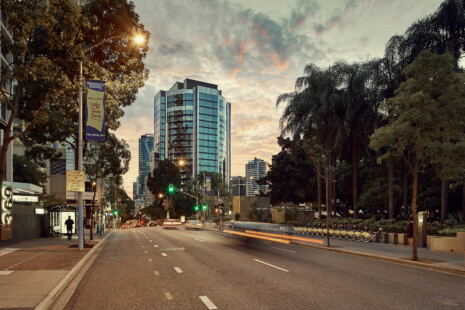
310 Ann Street
A strategic redevelopment that goes beyond surface upgrades—bringing new life to a Brisbane icon. The ‘Wedding Cake’ building, once a proud icon of Brisbane’s skyline, had lost its prominence after three decades,…
Project
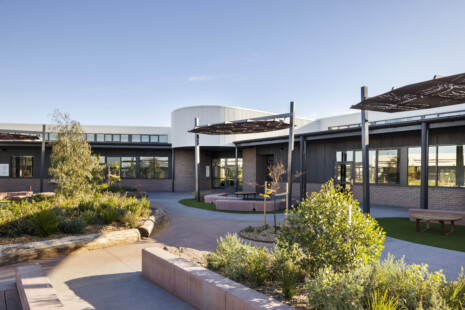
New Schools 2024 – Nganboo Borron School
Nganboo Borron School in Melbourne’s south-west is a specialist school that delivers a tailored learning environment to children with mild to severe intellectual disabilities.