DesignInc Wins LEA VIC/TAS Chapter Award – Insights from Brinbeal Secondary College

DesignInc Melbourne, in collaboration with Brand Architects, has been named Winner – Category 2: New Campus with Educational Facilities at the Learning Environments Australasia (LEA) Victoria Chapter Awards for our work on Brinbeal Secondary College.

Brinbeal Secondary College demonstrates an exemplary approach to inclusive education design. The decentralised wellbeing model, flexible learning neighbourhoods, and strong sustainability principles create a campus that is both innovative and deeply responsive to student needs.

Jury Citation
LEA VIC/TAS Chapter Awards
A Benchmark for Inclusive Education

Brinbeal Secondary College was conceived under the Victorian School Building Authority’s Supported Inclusion School model, designed to decentralise student support and embed wellbeing services throughout the campus. This approach ensures every learner has access to spaces that foster equity, adaptability, and community connection.

Design Philosophy

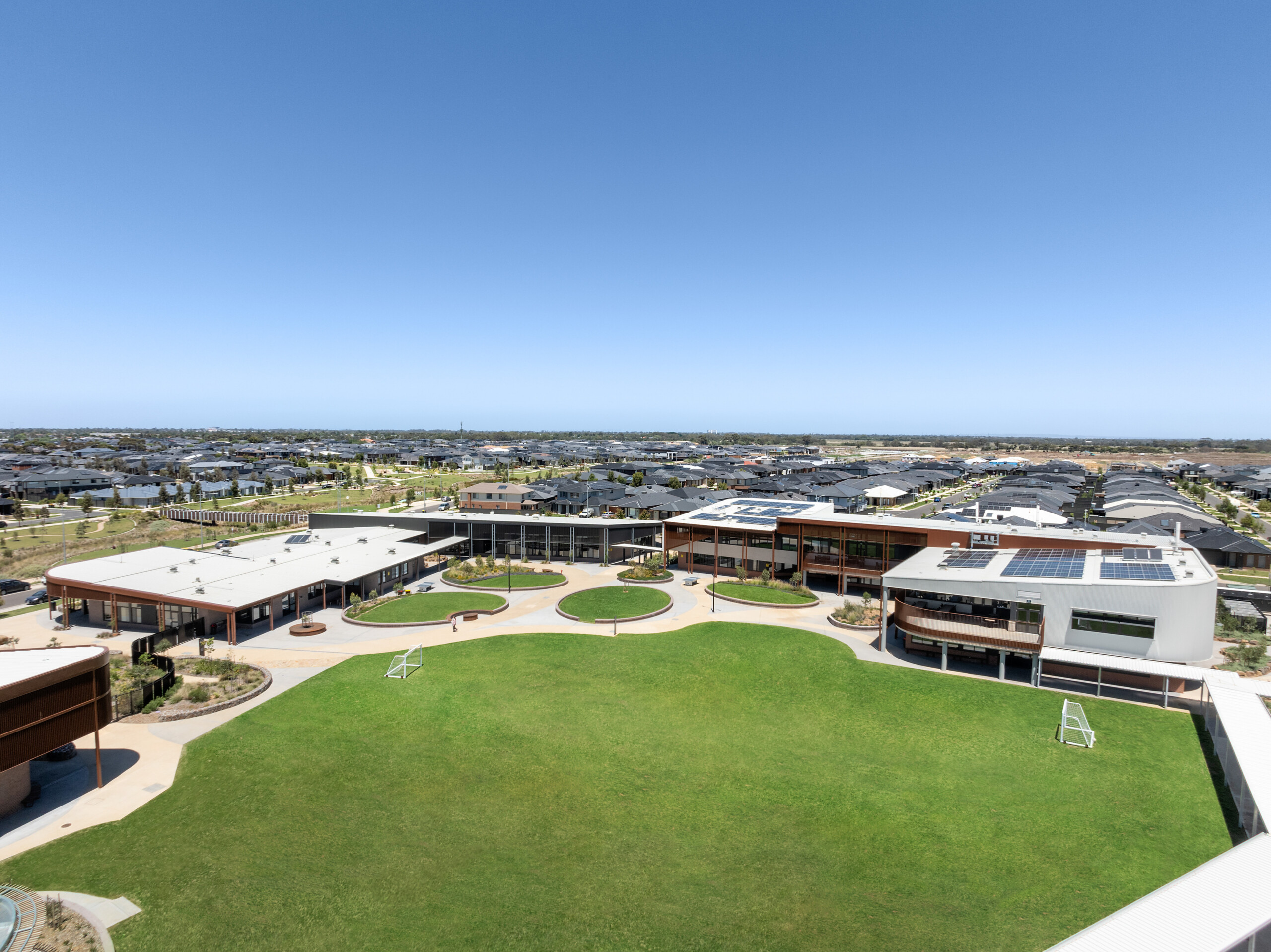
The campus accommodates 2,160 students, including 160 within a dedicated Inclusion Hub, and is organised around a landscaped “school heart.” Key features include:

  • Three Learning Neighbourhoods offering flexible, collaborative spaces
  • Specialist facilities for STEM, Visual Arts, and Performing Arts A vibrant Community Hub hosting sports, performances, and public events
  • Embedded Wellbeing Hubs and sensory rooms to support diverse needs
  • Universal access features such as hoists, accessible amenities, and calming spaces
  • Strong ESD principles: passive solar design, natural ventilation, CO₂ monitoring, solar PV, and active commuting facilities

Brinbeal is more than a school—it’s a community hub and a model for inclusive, future-focused education. Our design team worked closely with stakeholders to create spaces that empower every learner and connect people to place.

Jane Sayers
Director

Design Strategies That Worked

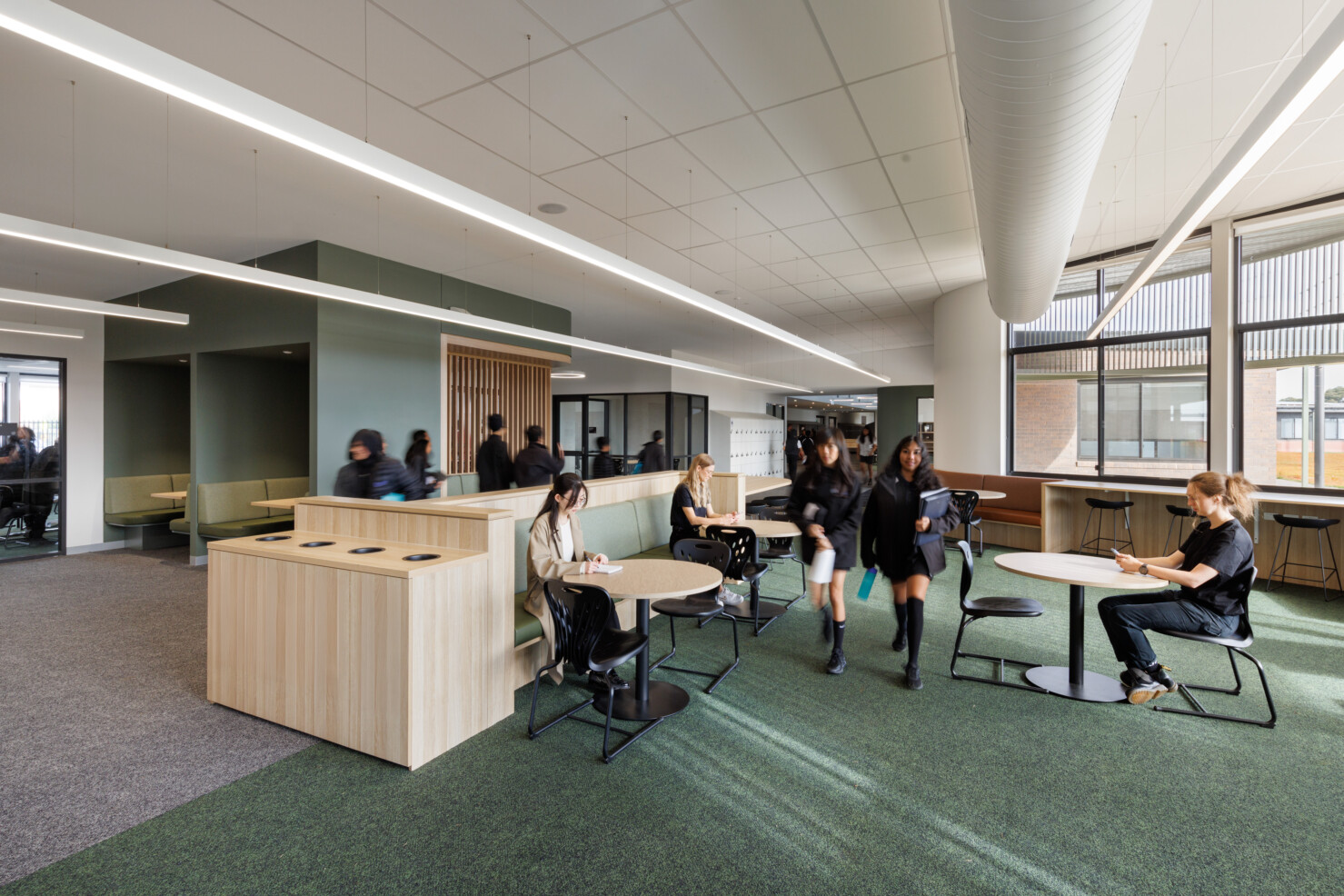
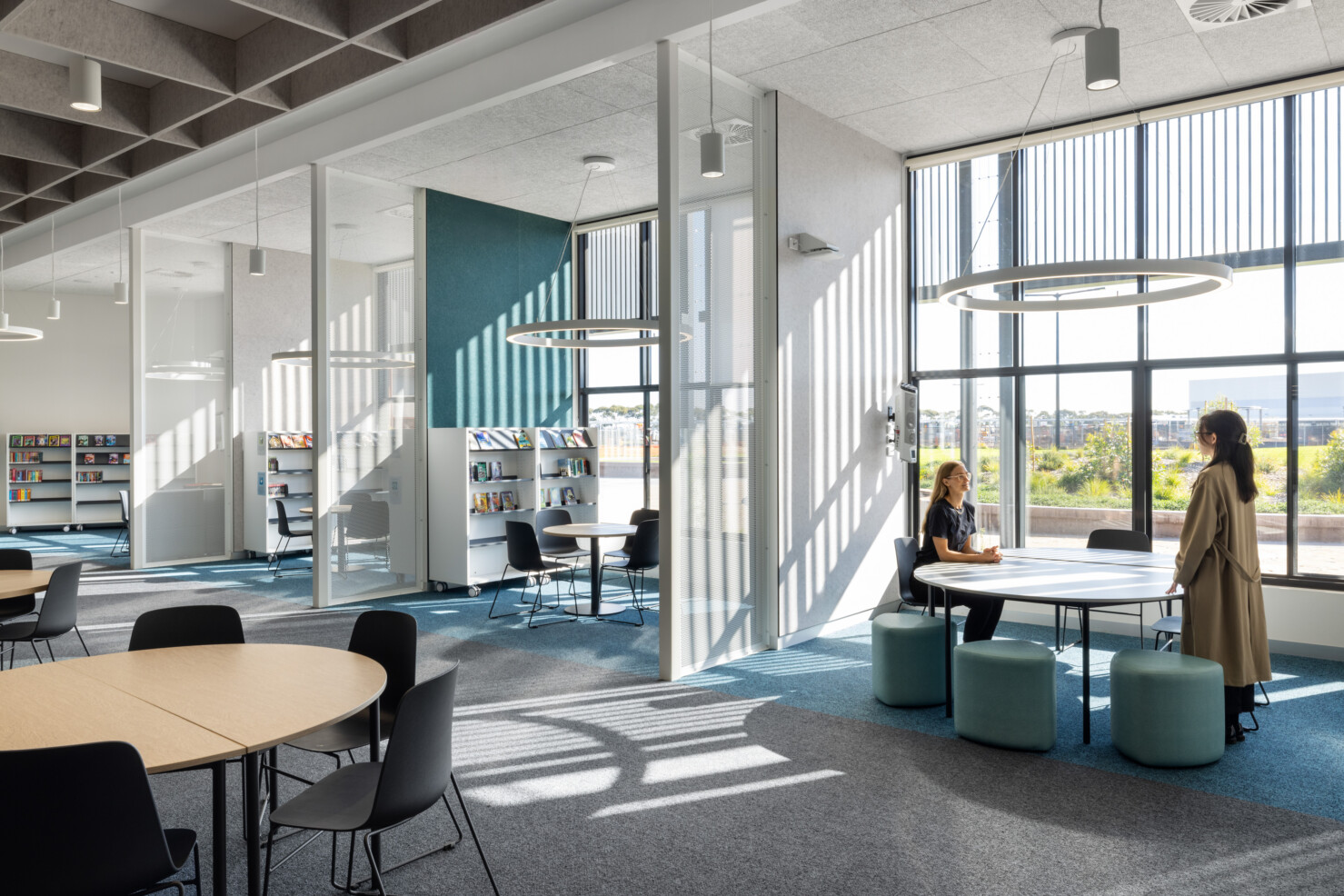
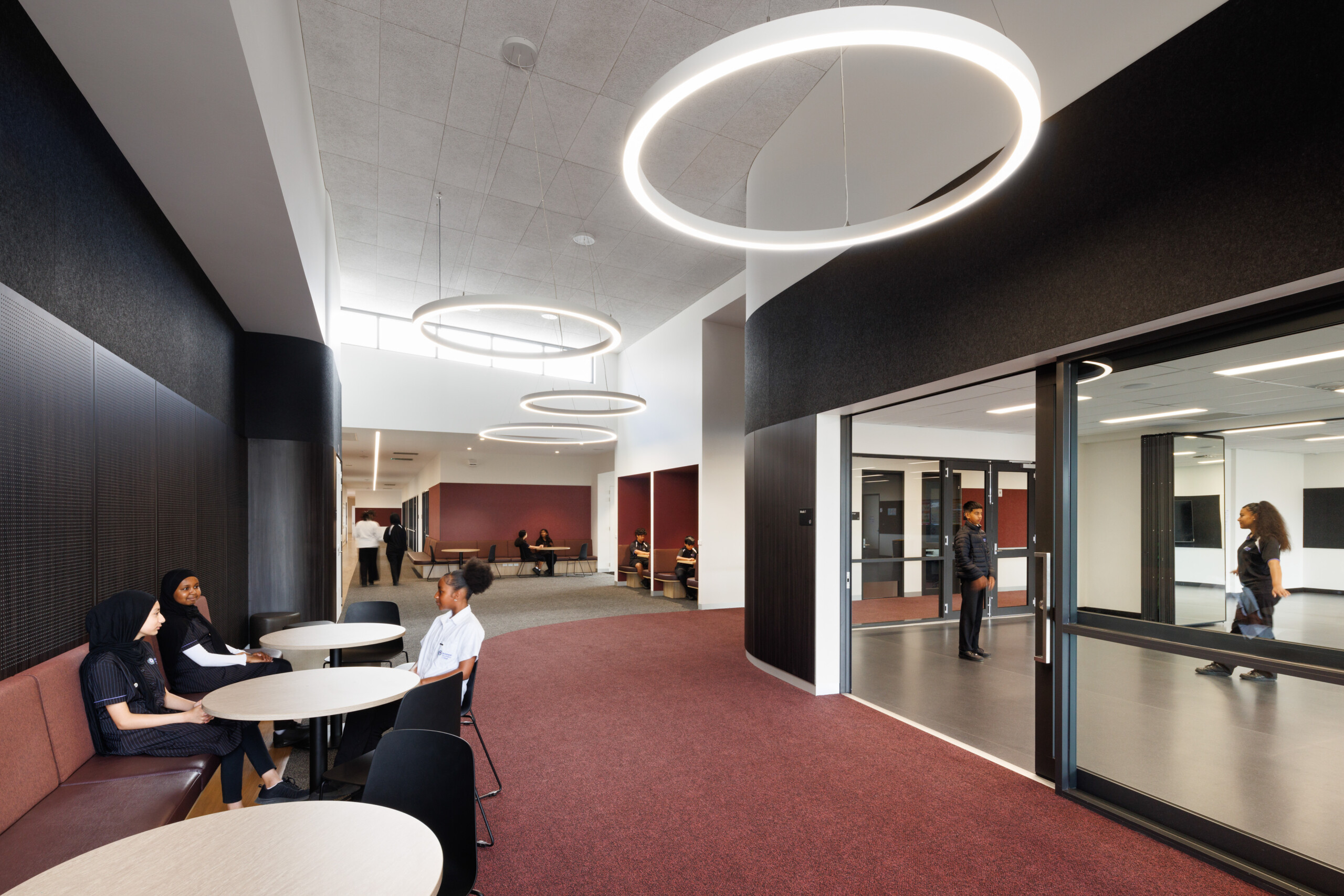
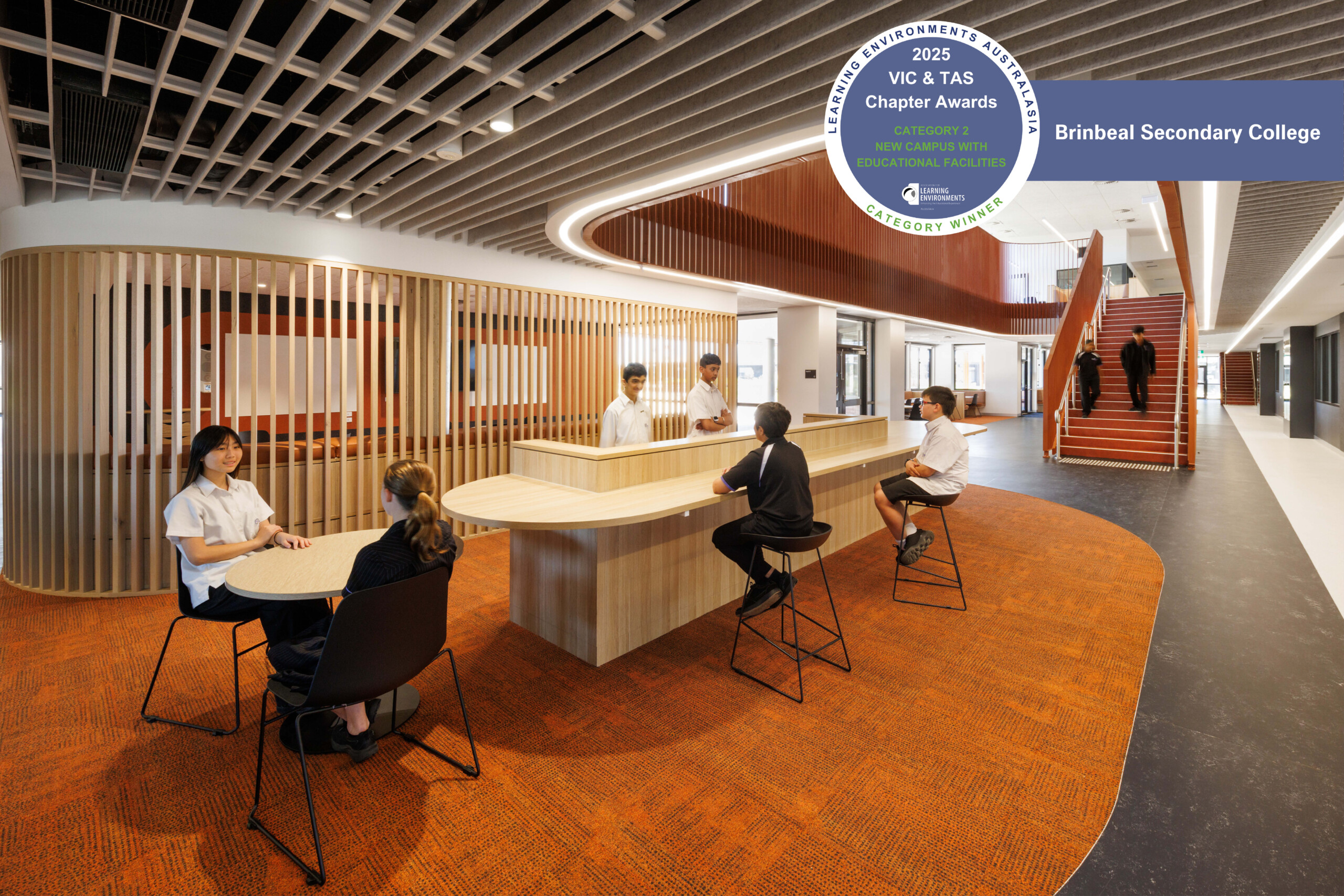
  • Collaboration Zones: A variety of spaces—from open commons to small ideation booths—support individual, group, and exhibition activities. Writing walls and pin-up areas make learning visible.
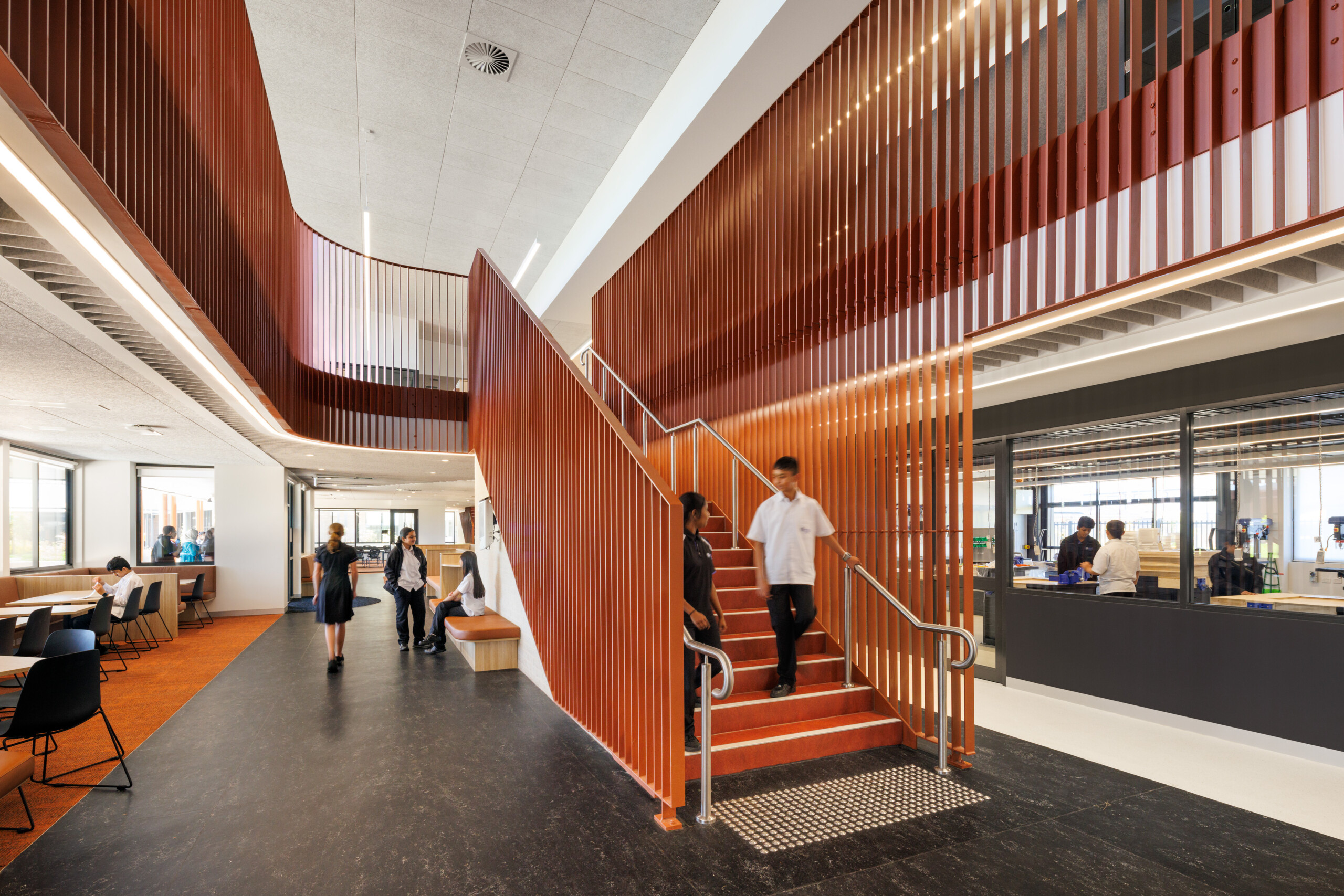
  • Vertical Connectivity: Stairs and voids create visual links between levels, encouraging movement and interaction.
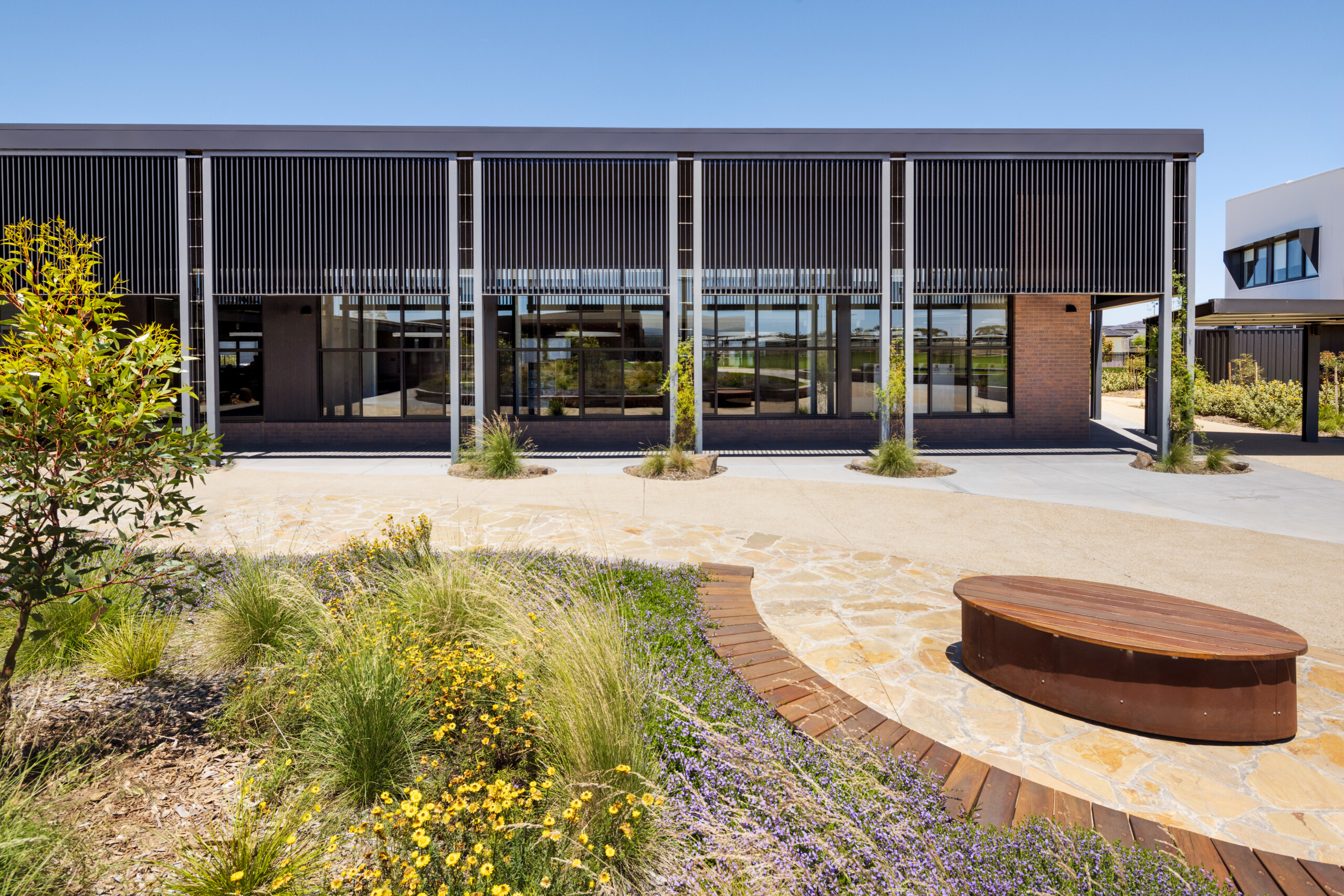
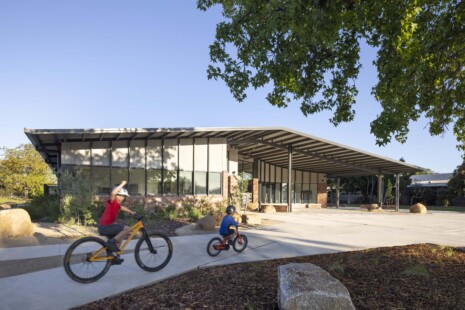
  • Indoor–Outdoor Flow: Covered outdoor learning areas and biophilic landscaping connect students to nature and Country.
  • Material Palette: Warm, locally sourced materials and muted tones reduce sensory overload while reinforcing identity.
  • Wayfinding Through Colour: Each building adopts a unique colour strategy for intuitive navigation.
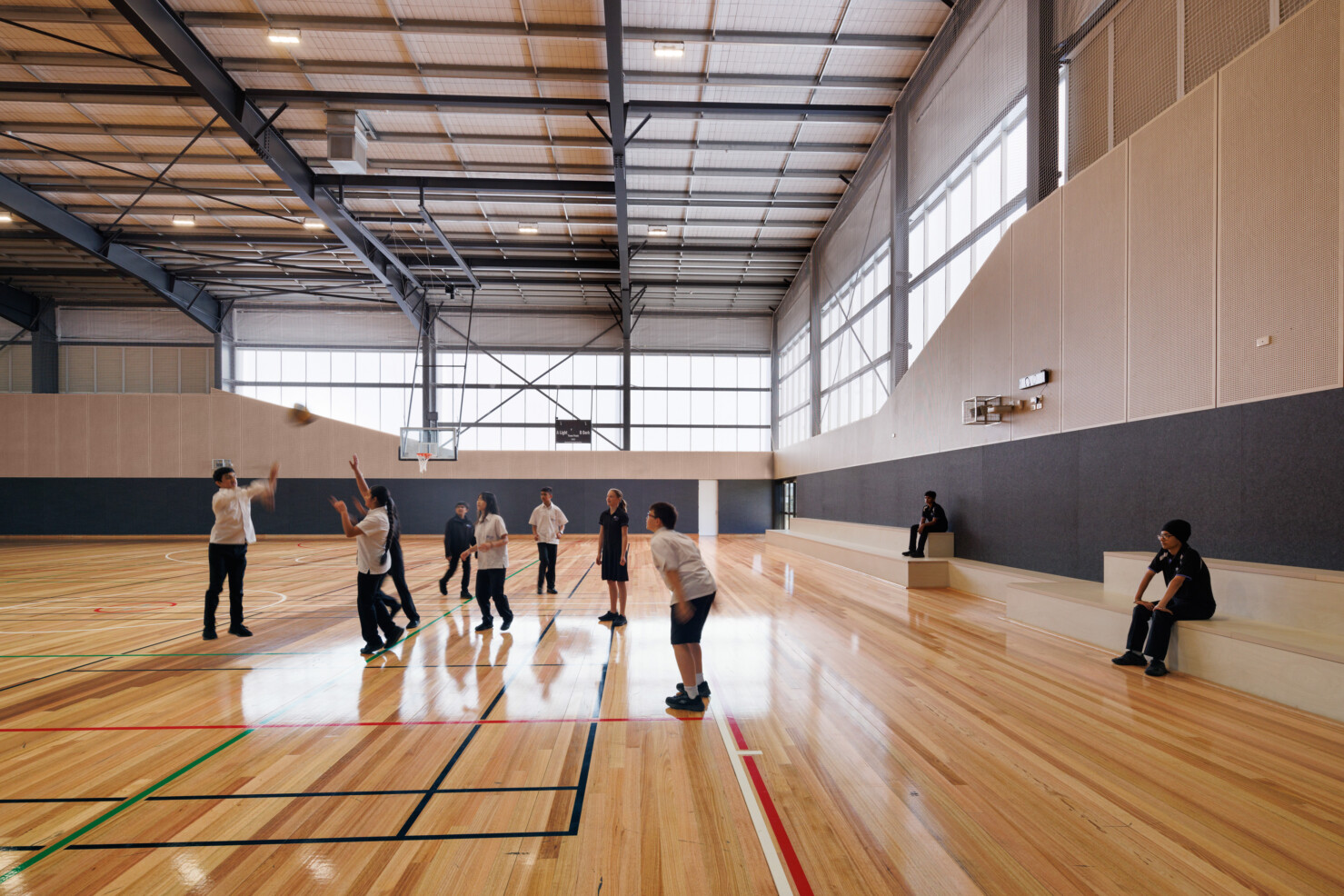
  • Community Integration: Retractable seating in the Performing Arts Centre and multipurpose courts in the Community Hub enable school and public use.

Key Insights

01

Inclusion Must Be Embedded, Not Added
Brinbeal’s Supported Inclusion model decentralises wellbeing services, integrating support into every learning neighbourhood rather than isolating it. This approach normalises access and reduces stigma, creating a culture of care.

Implication: Future schools should move beyond compliance and design for equity as a lived experience, not a separate program.

02

Flexibility Enables Future-Ready Learning
The home base, community, and neighbourhood model allows spaces to adapt to different pedagogies and enrolment changes. From enclosed classrooms to open collaboration zones, Brinbeal supports diverse learning modes.

Implication: Designing for polyvalence—spaces that can shift between individual, group, and community use—future-proofs educational environments.

03

Sustainability is a Wellbeing Strategy
Brinbeal’s integrated ESD principles—passive solar design, natural ventilation, CO₂ monitoring, and solar PV—do more than reduce carbon emissions. They create healthier, more comfortable spaces that enhance learning outcomes.

Implication: Sustainability should be positioned as a core educational value, not just an operational metric.

04

Schools as Community Anchors The Community Hub and Performing Arts facilities extend Brinbeal’s role beyond education, hosting sports, performances, and public events. This strengthens social cohesion and maximises public investment.

Implication: Schools designed as community assets foster lifelong learning and civic engagement.

Inclusion works best when it’s part of the DNA of the campus. By embedding wellbeing hubs and sensory spaces throughout, we’ve created environments where every student feels supported without barriers.

Ellen Wilkinson
Senior Associate | Education Lead

Looking Ahead: Stage 2

We are excited to continue this journey with Stage 2, which will deliver:

  • Two additional Learning Neighbourhoods
  • A Visual Arts building supporting ceramics, visual arts, visual communication, and textiles
  • Completion of the landscape, including two soccer pitches

Stage 2 will further enhance Brinbeal’s capacity to deliver a holistic, inclusive, and creative learning experience.