We acknowledge and pay respect to the past, present and future Traditional Custodians and Elders of this nation and the continuation of cultural, spiritual and educational practices of Aboriginal and Torres Strait Islander peoples.
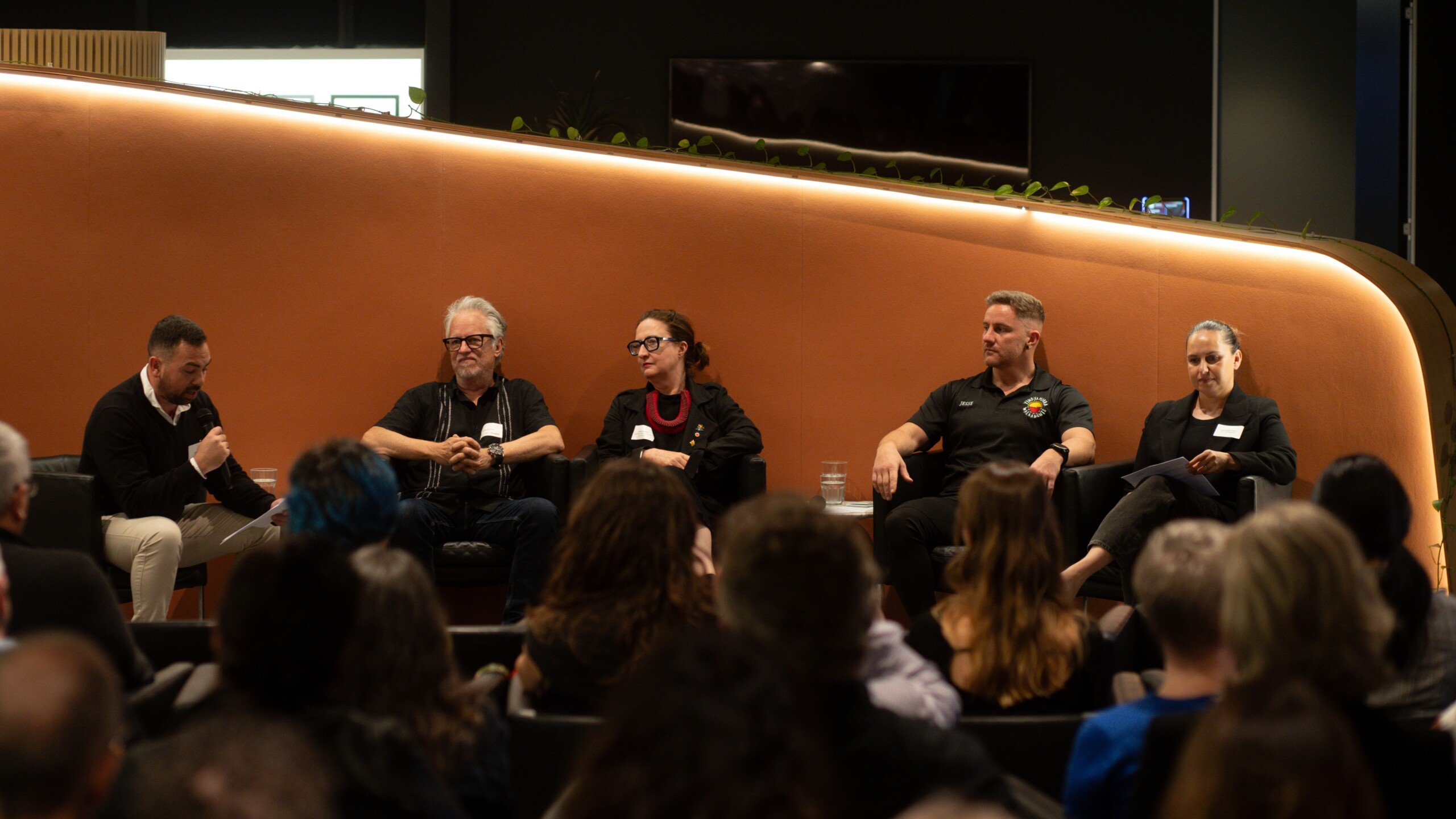
This National Reconciliation Week, DesignInc Sydney welcomed clients, collaborators and built environment peers for All In for Reconciliation, a panel discussion exploring Indigenous leadership, cultural knowledge, trust and the role of design in shaping more inclusive places.
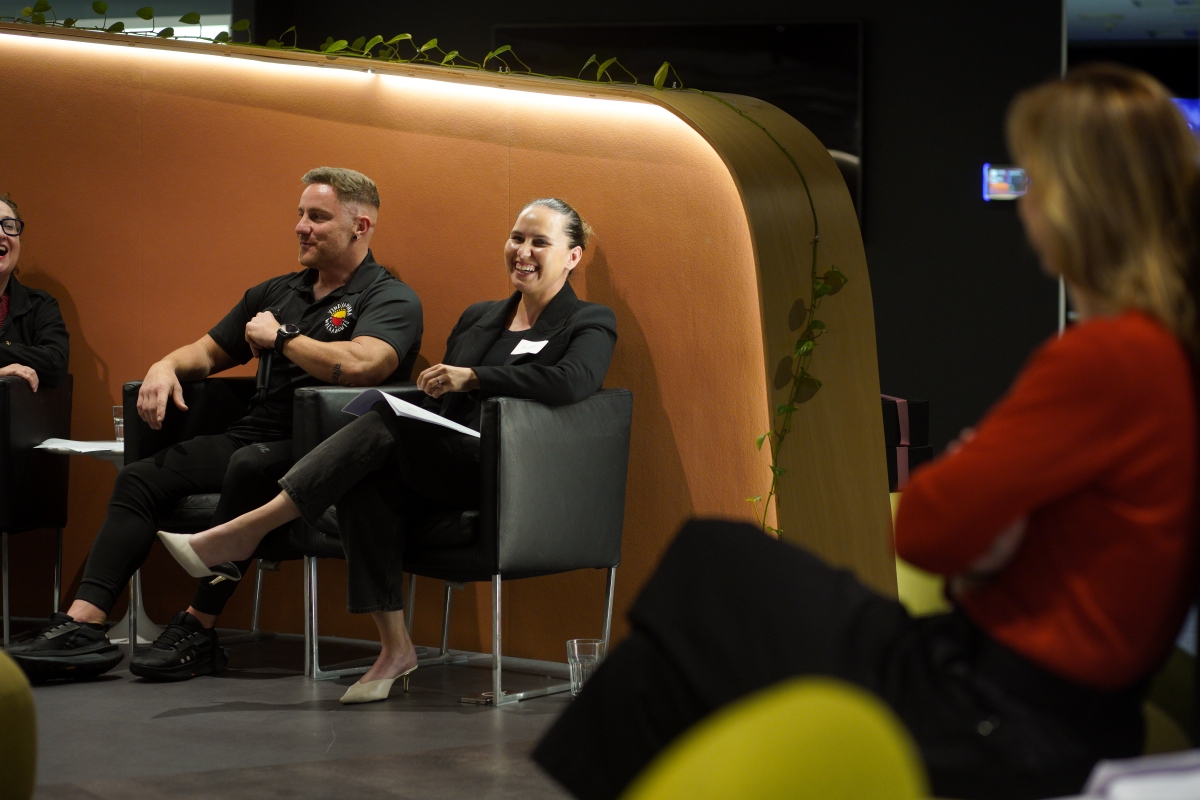
Held at DesignInc Sydney on Gadigal Country, the event brought togetherJosh Duke, Chairperson of Nguluway DesignInc, with panellists Yatu Widders Hunt, Jesse Lowe, Annie Tennant and Craig Kerslake. The event was listed as part of Reconciliation Australia’s National Reconciliation Week 2026 calendar, bringing together Indigenous and design voices to explore reconciliation, cultural leadership, design, planning and storytelling across the built environment.
How Reconciliation Can Be Practically Considered in Design Thinking.
Opening the evening, Josh Duke reflected on this year’s National Reconciliation Week theme, All In, as a reminder that reconciliation cannot sit with one person, one team or one community alone.
“Reconciliation is a team sport,” Josh said. “The idea behind the theme this year is for everyone to really work together, hand in glove.”
That idea, shared responsibility, shared learning and shared action, shaped much of the conversation. For Yatu Widders Hunt, being “All In” means embedding reconciliation across the full structure of an organisation, rather than leaving it to one team or function.
“When I think about All In, I think about how much everyone’s role and every part of an organisation actually has a contribution,” Yatu said.
She spoke about the practical role that legal, marketing, procurement, leadership and project teams can each play in respecting First Nations knowledge, rights and storytelling. Reconciliation, in this framing, is not simply a statement of intent. It is a way of working.
“Being All In doesn’t just mean listening and taking on board. It actually sometimes means making space for First Nations excellence to lead.”
For architecture, planning and design, this point carries particular weight. Indigenous Architecture is often discussed through the language of Country, culture and place, but the panel made clear that meaningful practice depends as much on process as outcome. Who is invited into a project? When are they invited? What authority do they have? What decisions have already been made?
Yatu Widders Hunt discussed shared responsibility, First Nations excellence and the difference between consultation and genuine co-design.
Yatu offered one of the evening’s clearest distinctions between consultation and genuine co-design, recalling a moment when Elders challenged the use of the term co-design on a project.
“The Elders said to me, ‘Was the budget fixed?’ ‘Yeah.’ ‘Well, it’s not co-design. You’re actually consulting me.’”
It was a practical reminder that language matters. If the scope, budget and outcomes are already fixed, the process may still have value, but it should not be overstated as shared authorship. For the built environment, where consultation is often compressed into tight project programs, this distinction is critical.
Annie Tennant also spoke to the need for deeper partnership, particularly when working with First Nations communities and collaborators.
“It’s got to be a partnership,” Annie said. “It can’t be, ‘Here, I’ve saved this little corner of the building for you to do something.’”
She also reminded the room that meaningful engagement with Country and community is not limited to early design workshops. It needs to be considered across the full life of a project.
“If we really, really want to think about what we can do for Country and for community, we need to think about the whole lifecycle of the design and delivery process.”
That lifecycle includes design development, delivery, construction, operations, maintenance, procurement, jobs and economic participation. It also asks architects, planners, clients and consultants to consider the long-term relationships that projects create beyond places they produce.
Throughout the evening, Jesse Lowe returned to the importance of slowing down, listening deeply and practising respect in the way people relate to Country, community and one another. He spoke about Yindyamarra as a Wiradjuri concept grounded in respect, honour, gentleness and care, a way of being that can guide how people move through relationships, place and practice.
In an industry often shaped by speed, budget and delivery pressure, Jesse asked the room to consider what is lost when projects move too quickly.
“You can’t rush these things. You can’t rush trust.”
He also spoke about the need to resist systems that treat people as machines.
“Our society is built on efficiency and speed. But we are not machines. We are living, breathing ecosystems.”
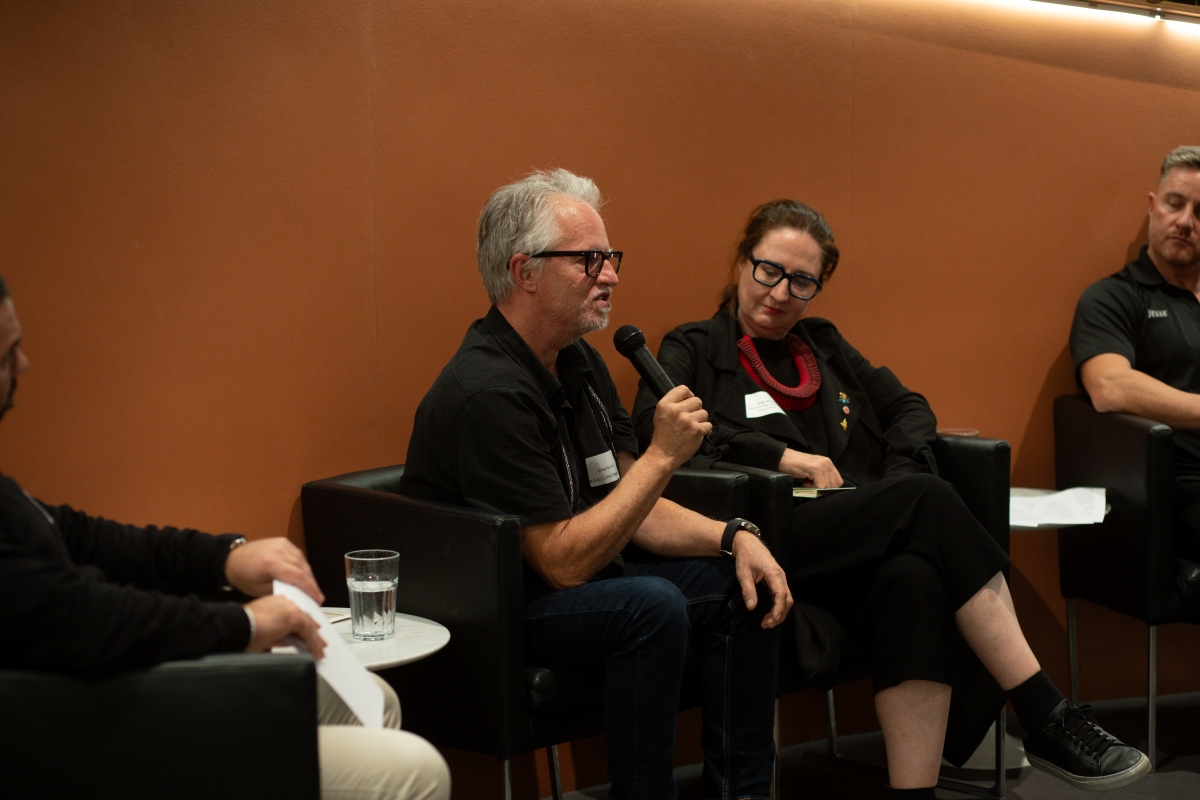
Craig Kerslake, Wiradjuri Architect and Director of Nguluway DesignInc, spoke about mentorship and culturally grounded pathways for First Nations people in architecture.
For Craig Kerslake, Wiradjuri Architect and Director of Nguluway DesignInc, the discussion of Indigenous Architecture also raised questions of representation and mentorship within the profession. As more projects seek to engage with Indigenous design principles and Designing with Country, Craig spoke about the need to support First Nations practitioners through culturally grounded pathways.
“I think it’s about creating opportunities for young Aboriginal people to be given the chance to be mentored by Aboriginal mentors, reinvigorating an old tradition of passing down the laws from older to younger. For architecture, that means being mentored by Indigenous architects.”
He also pointed to the practical responsibility of the profession to support connections between emerging and established Indigenous practitioners.
“You know, the best way to enable this cultural tradition is to support the connection between graduates and practising Indigenous architects.”
The audience discussion extended these themes into practical questions about housing, engineering, planning, procurement, government policy and the systems that shape what gets built. Across these questions, the panel returned to the same core ideas: relationships need time; trust needs to be earned; and meaningful change requires more than good intent.
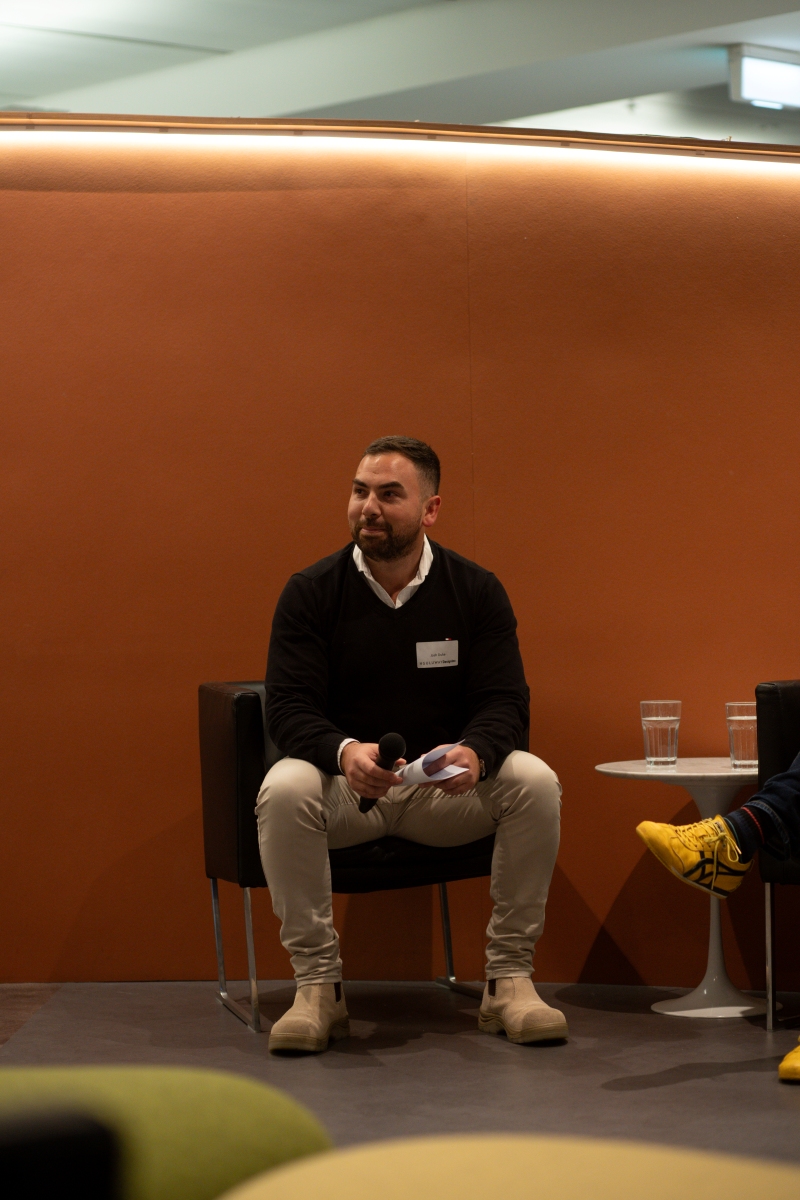
Josh Duke (pictured) reflected on this through the lens of both cultural and commercial practice.
“You can only move as fast as the speed of trust,” he said. “Most people can do the job, right? But you want to be able to do it with somebody that you trust.”
He also challenged the room to think beyond the perceived cost of doing things differently.
When you think about the cost of these things, also think about the cost of inaction. We have seen the impacts of inaction play out across the Australian commercial landscape time and time again and the lessons don’t appear to have been learnt.
For DesignInc Sydney, the panel was a continuation of an ongoing conversation about reconciliation in practice, Indigenous Architecture, Designing with Country, and the role of the built environment in shaping places that are more inclusive, culturally grounded and responsive to community.
As the theme All In suggests, this work belongs to everyone. But the panel also made clear that being All In requires listening, resourcing, accountability, shared authority and the willingness to move at the speed of trust.
Images courtesy of Francesco Camillo / DesignInc Sydney
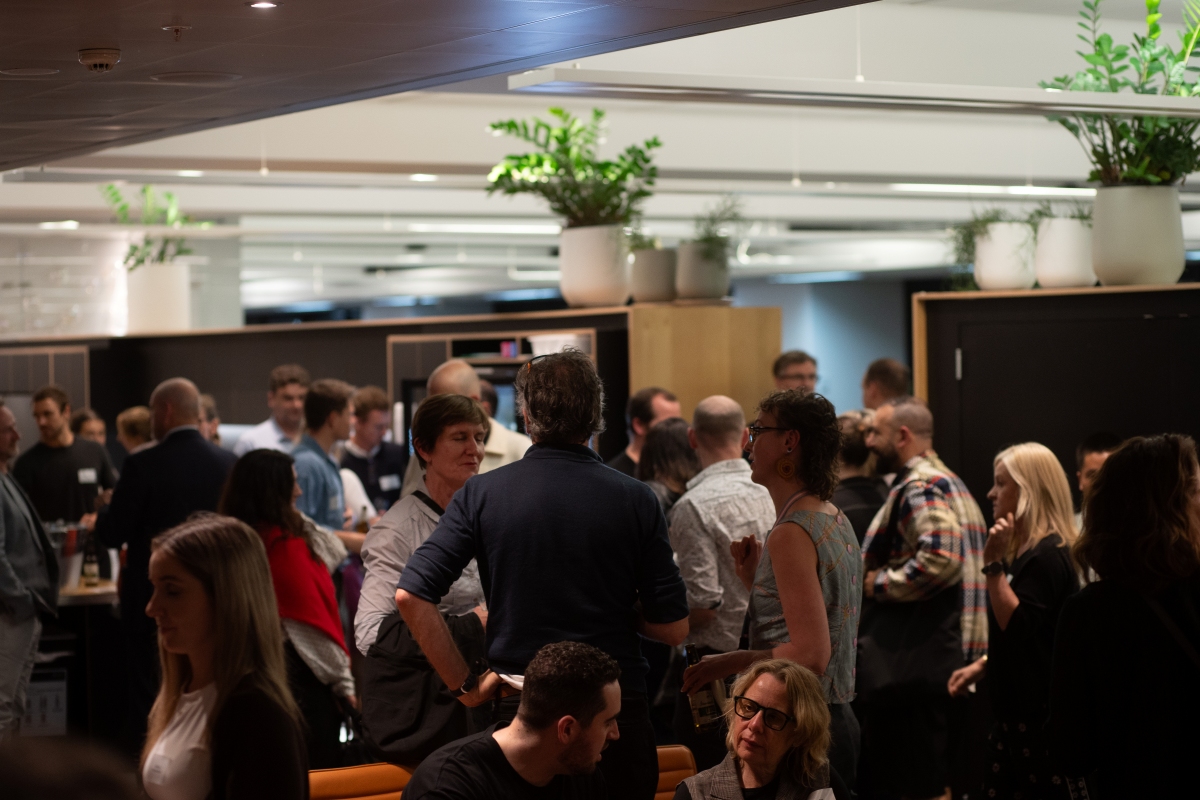
Guests continued the conversation following the panel discussion at DesignInc Sydney.
As National Reconciliation Week prompts reflection across the architecture and design industry, we’ve been thinking about the role practices play in building stronger relationships with Country, community and culture through the built…
As part of NAIDOC Week 2023, DesignInc Sydney and Nguluway DesignInc collaborated with Ethos Urban and Curio Projects to host an exciting event on Cockatoo Island—’Architecture, Design, People and Place’.
It’s been three years since Nguluway DesignInc began, and we’re proud to have made a huge impact through our projects, our culture, our people and events. Projects In our first three years,…